



A Serious Choice If a Problem Has Been Ignored Long Enough
We work with people who've been compensating. You chew on the other side. You hide the gap when you smile. You've been told a bridge is your only option, but grinding down two healthy teeth to replace one doesn't sit right.
If that sounds familiar, you're in the right place.

One tooth is gone and you've adapted. Your bite has shifted. You're protecting the gap without thinking about it.
It shows when you smile. When you talk. When you laugh. You've gotten good at covering it, but you're done managing it.
You've been offered one. Maybe you've had one before. But the idea of altering two healthy teeth to replace one doesn't make sense to you.

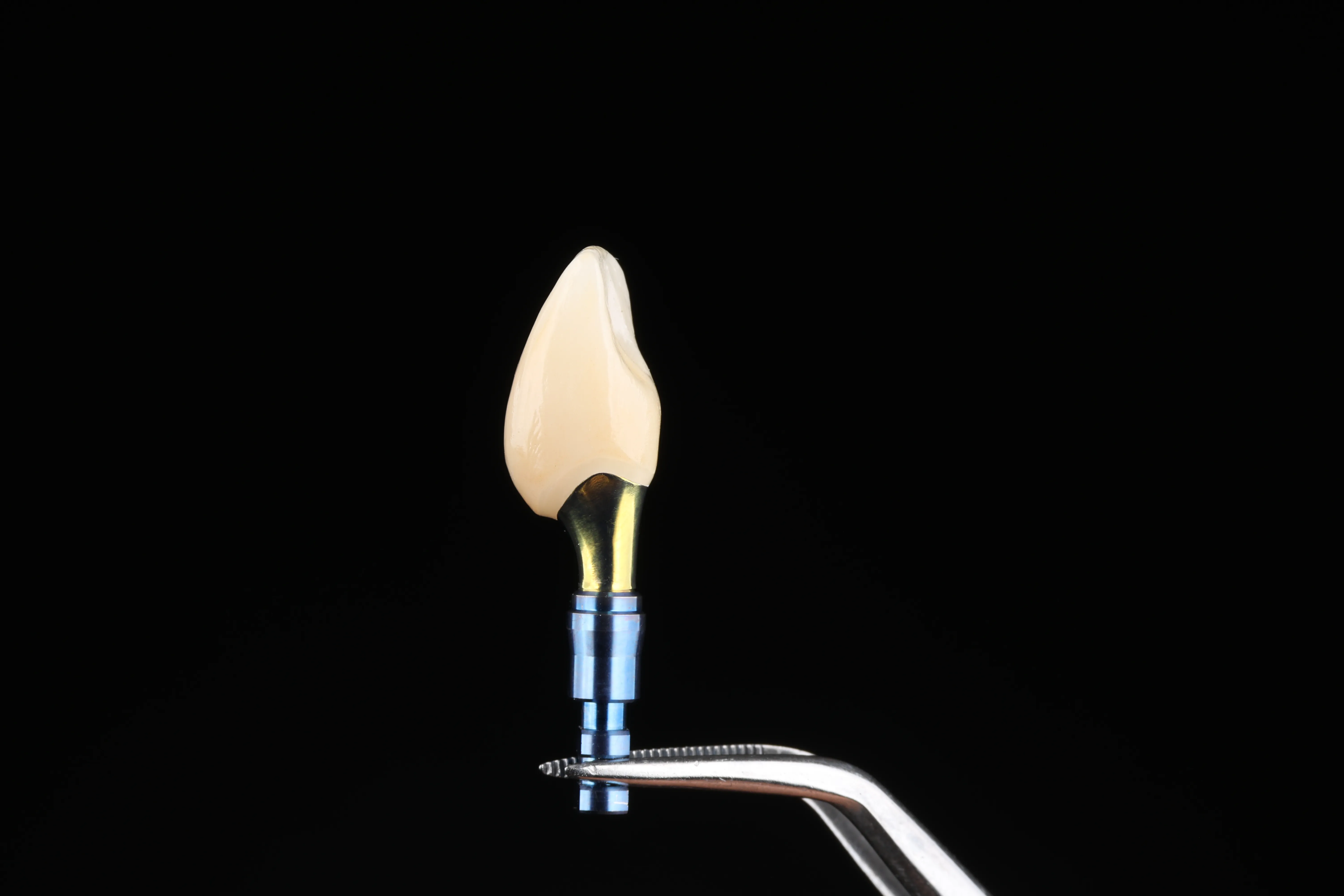
What is a Dental Implant?
A single dental implant replaces one missing tooth without using the neighboring teeth for support. The implant post is placed in the jawbone, where it acts like an artificial tooth root. After healing, a custom abutment and crown are attached to restore the visible tooth.
Unlike a traditional bridge, a single implant stands on its own. It does not require reshaping the healthy teeth on either side of the gap. It also helps support the bone in the area where the tooth was lost.
At Livewell Dental, Dr. Chris uses 3D imaging, digital planning, and a custom crown design to help the implant fit your bite, your smile, and your long-term oral health.
.jpg)

Advanced Implant Training. One Doctor Guiding Your Care.
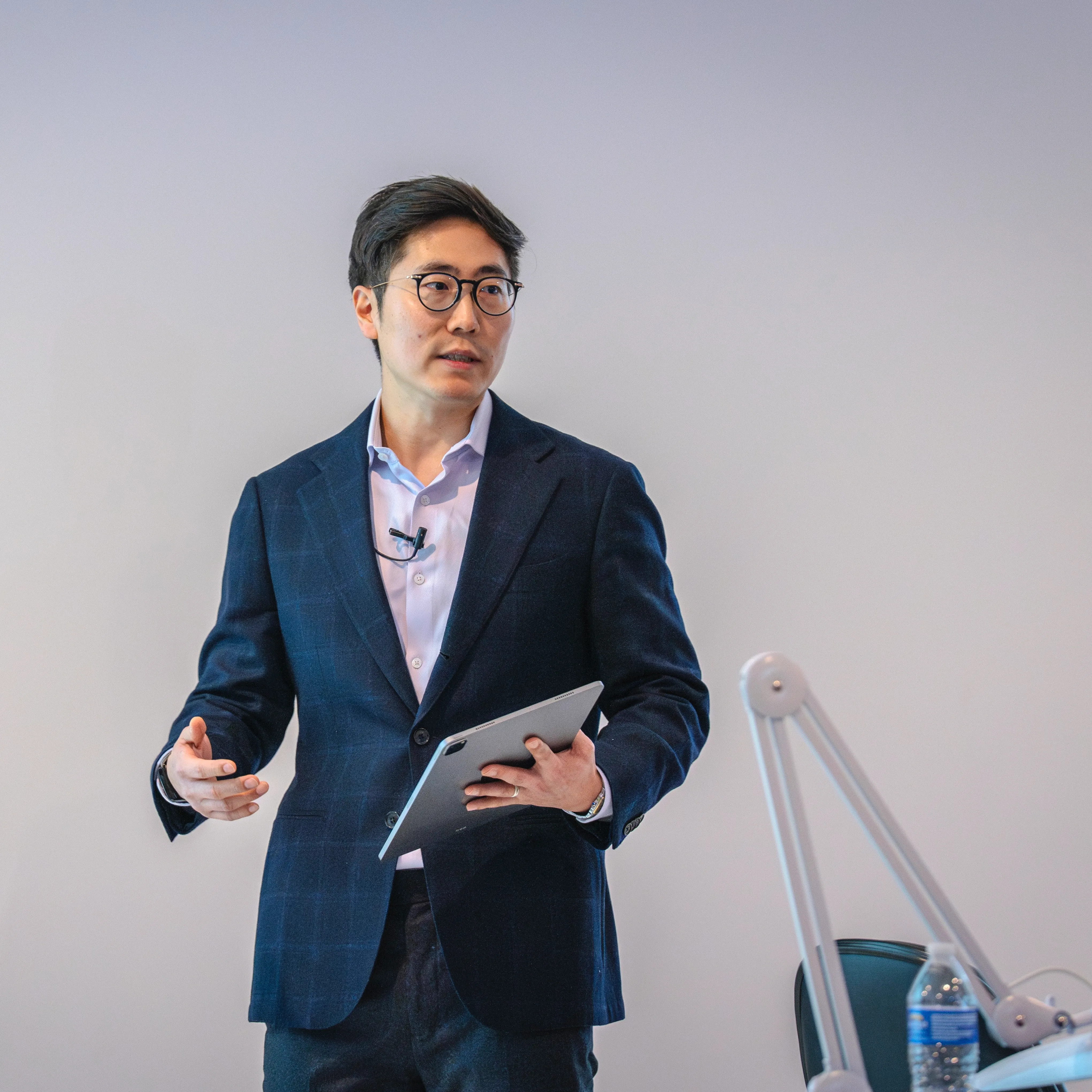
Dr. Chris
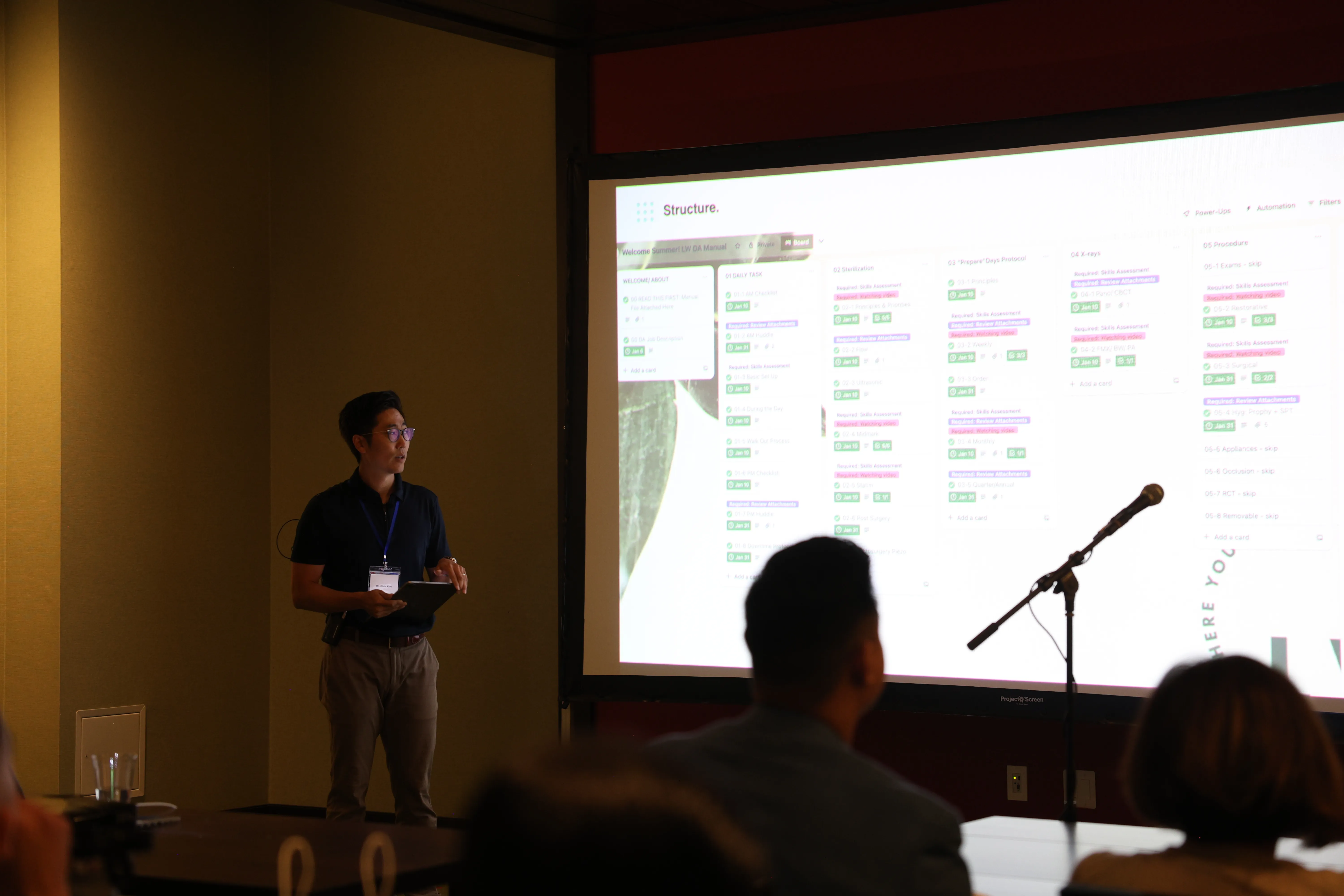
Dr. Chris doesn't just place implants. He teaches other dentists how to plan and execute complex cases as a Clinical Instructor at Implant Accelerator—one of the most respected advanced training programs in the country.
- Clinical Instructor, Implant Accelerator (2023): Teaches advanced implant surgery and restorative planning to practicing dentists nationwide
- Fellow, International Congress of Oral Implantologists (FICOI, 2022): Recognition of advanced training and clinical outcomes in implant dentistry
- Graduate, Kois Center (2021): One of the most rigorous evidence-based postdoctoral programs in dentistry
- Fellow, Academy of General Dentistry (FAGD, 2019): Earned by fewer than 6% of general dentists in the U.S.
- In-house surgical placement and restoration: Your implant is planned, placed, and restored by one dentist. No outside referrals. No handoffs.
.svg)
The Livewell Smile Collection
Designed with Purpose. Crafted to Belong.
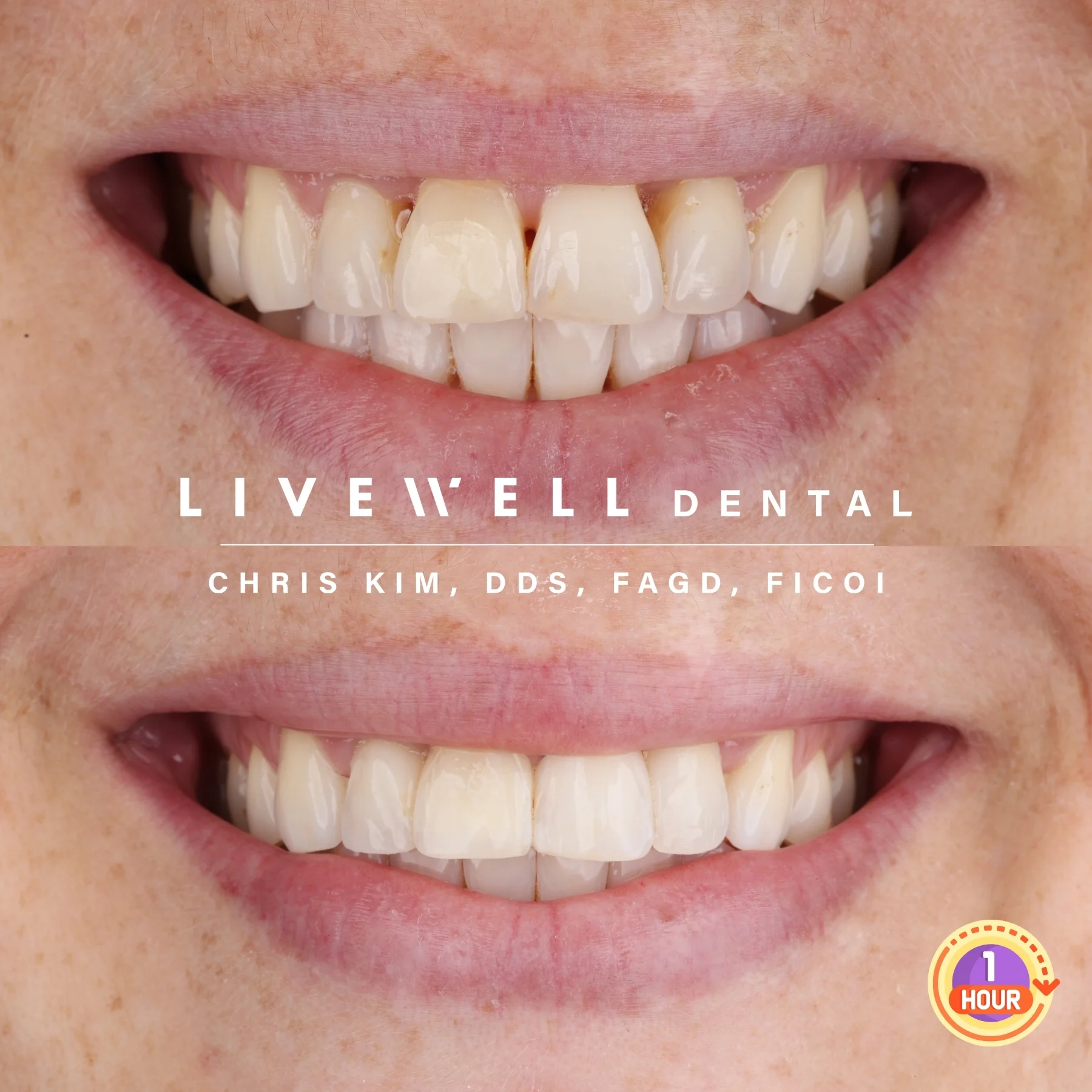
Perfect 1
One tooth. Perfectly matched. A single restoration (veneer, crown, or bonding) crafted to vanish into your natural smile with microscopic precision.
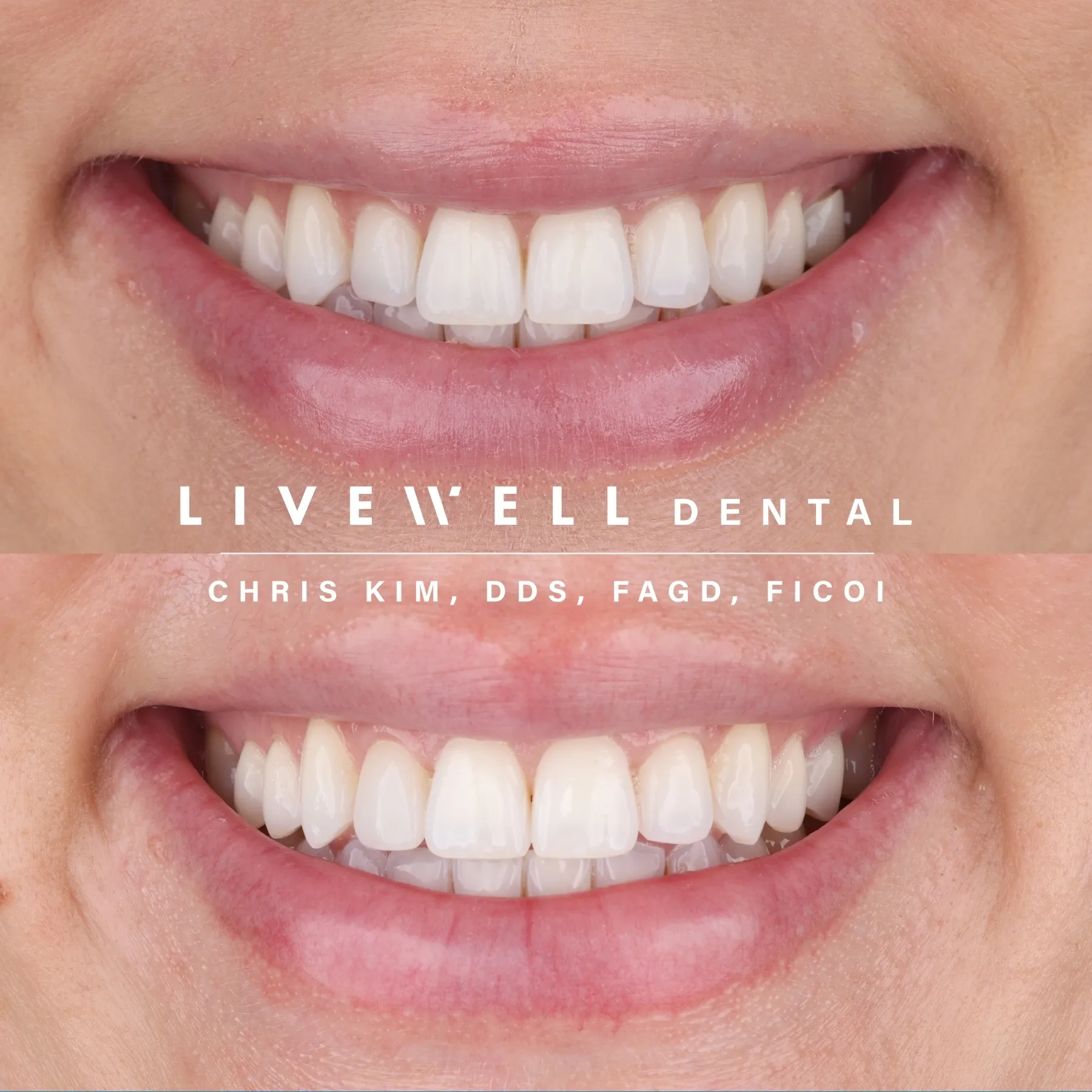
Perfect 1
Four front teeth. One magical transformation. Ideal for fixing wear, discoloration, or imbalance in the most visible zone of your smile.
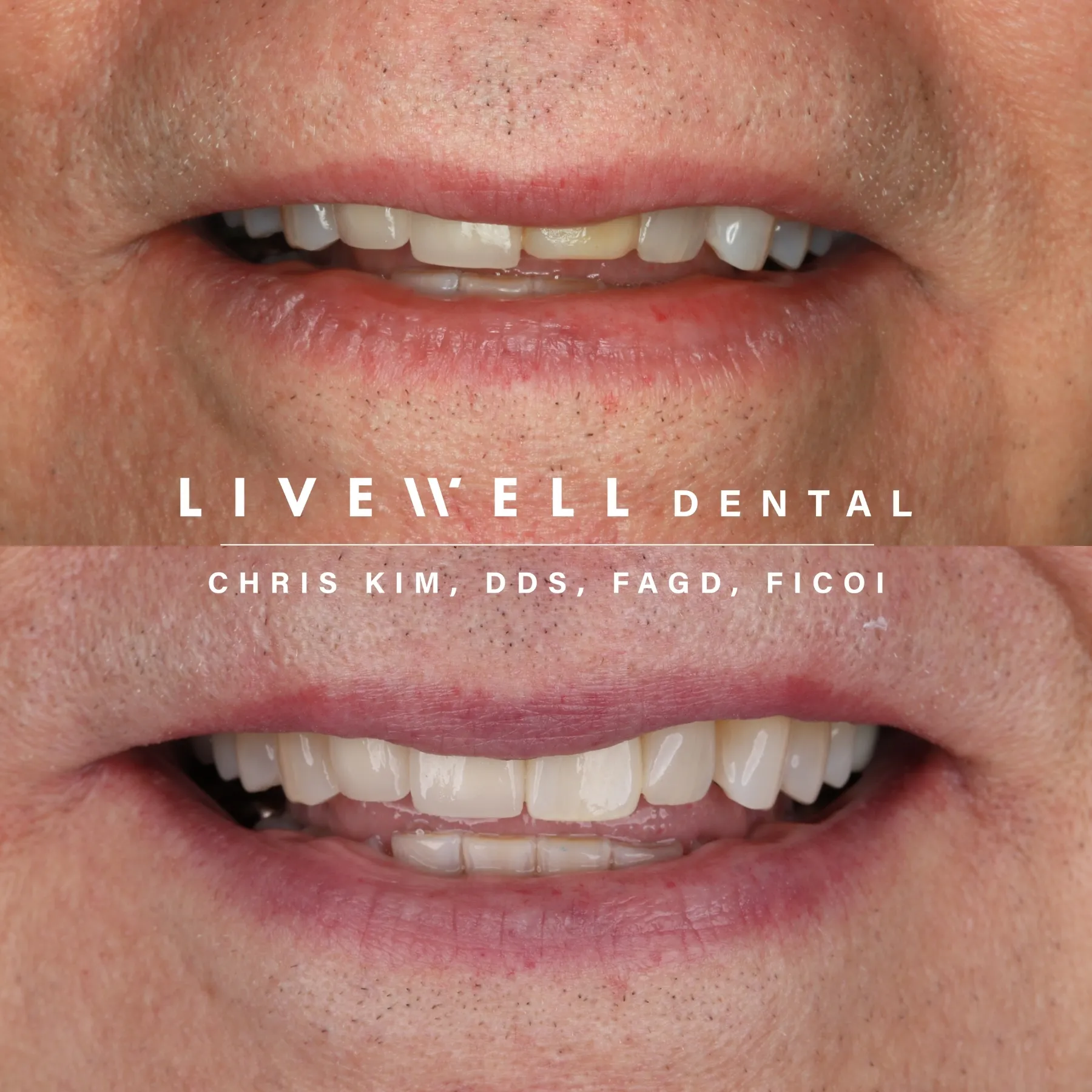
Perfect 1
Ten upper teeth, harmonized to perfection. Balanced, bright, and confident — ready for any setting, any angle, any moment.
Single Implant vs Bridge vs Partial Denture
| Feature | Single Implant | Tooth-Supported Bridge | Removable Partial Denture |
|---|---|---|---|
| Preserves bone | Yes—stimulates bone like a natural root | No—bone loss continues under the pontic | No—bone resorption continues |
| Affects adjacent teeth | No—stands alone | Yes—requires grinding down healthy teeth on both sides | Minimal—metal clasps may attach to neighbors |
| Longevity | 20+ years with proper care | 10-15 years typical lifespan | 5-7 years before replacement needed |
| Feels like a natural tooth | Yes—fixed, permanent, stable | Yes—fixed and permanent | No—removable, may shift when eating or speaking |
| Typical cost (Northern VA) | $$$—higher upfront, lower lifetime cost | $$—moderate cost, but may need replacement | $—lowest upfront cost, frequent adjustments |
| Ideal for | Most healthy adults with adequate bone density | When implant surgery isn't viable due to bone loss or medical contraindications | Temporary solution or multiple missing teeth in non-adjacent positions |
Advanced Training That Supports Precise Implant Care

.webp)

The Technology We Use Is Chosen for Accuracy, Not Show
Every piece of equipment we use has a specific job: better information before we start, better precision while we work, and support for smoother healing afterward.

CBCT 3D Imaging

3D Printing & Guided Surgery

CLEAN Implant System

PRF / PRP / CGF

Surgical Piezosurgery

Modern sedation and comfort techniques

Most cases take 3 to 5 months total. The placement appointment itself is usually under an hour. The majority of the timeline is healing time, while the implant fuses with bone. Once integration is confirmed, the final crown is placed in one or two short visits.
The procedure itself is done under local anesthesia, so you won't feel pain during placement. Sedation is also available. Afterward, most patients describe mild soreness for a few days, similar to having a tooth pulled. Over-the-counter medication typically handles it. Many patients return to light activity within a day or two, depending on the complexity of the case and their overall health.
The implant post is designed as a long-term replacement root, but its lifespan depends on bone health, gum health, bite forces, hygiene, and maintenance. The crown on top may need replacement over time due to normal wear.
A bridge requires filing down the two teeth on either side of the gap to support a connected three-unit restoration. An implant stands on its own. It doesn't touch neighboring teeth. It also preserves the jawbone beneath it, which a bridge cannot do. For many patients with healthy teeth on both sides of the gap, an implant may be the more conservative long-term option.
In many cases, yes. If the bone has thinned since the tooth was lost, a bone graft can rebuild the area before or during implant placement. The CBCT scan we take at your first visit shows us exactly how much bone is available and whether grafting is needed.
That's the point. The crown is custom-made to match the shade, shape, and surface texture of your surrounding teeth. Dr. Chris designs it to fit your bite and smile line. The goal is a result that blends naturally with your smile.
After a tooth is lost, the bone in that area can shrink over time. Nearby teeth may also begin to shift toward the open space, and the bite can change. Over time, this may lead to uneven wear, jaw discomfort, or more complex treatment needs. Replacing the tooth earlier often gives you more straightforward options.
A single implant — covering the implant post, abutment, and crown — typically runs $3,000 to $6,000. Where you land in that range depends on a few things specific to your case.
The type of implant plays a role (titanium vs. zirconia, standard vs. premium components), and so does the complexity of your case — if you need a bone graft or sinus lift beforehand, that adds to the total. Standard pricing includes your consultation, imaging, the implant placement itself, the abutment, and the crown.