




.svg)

Why You Might Need This

A large filling can crack, leak, wear down, or leave the tooth weaker over time.
Molars take heavy chewing pressure, so even a small break can become a bigger problem.
If too much tooth is missing, a standard filling may not protect the tooth well.
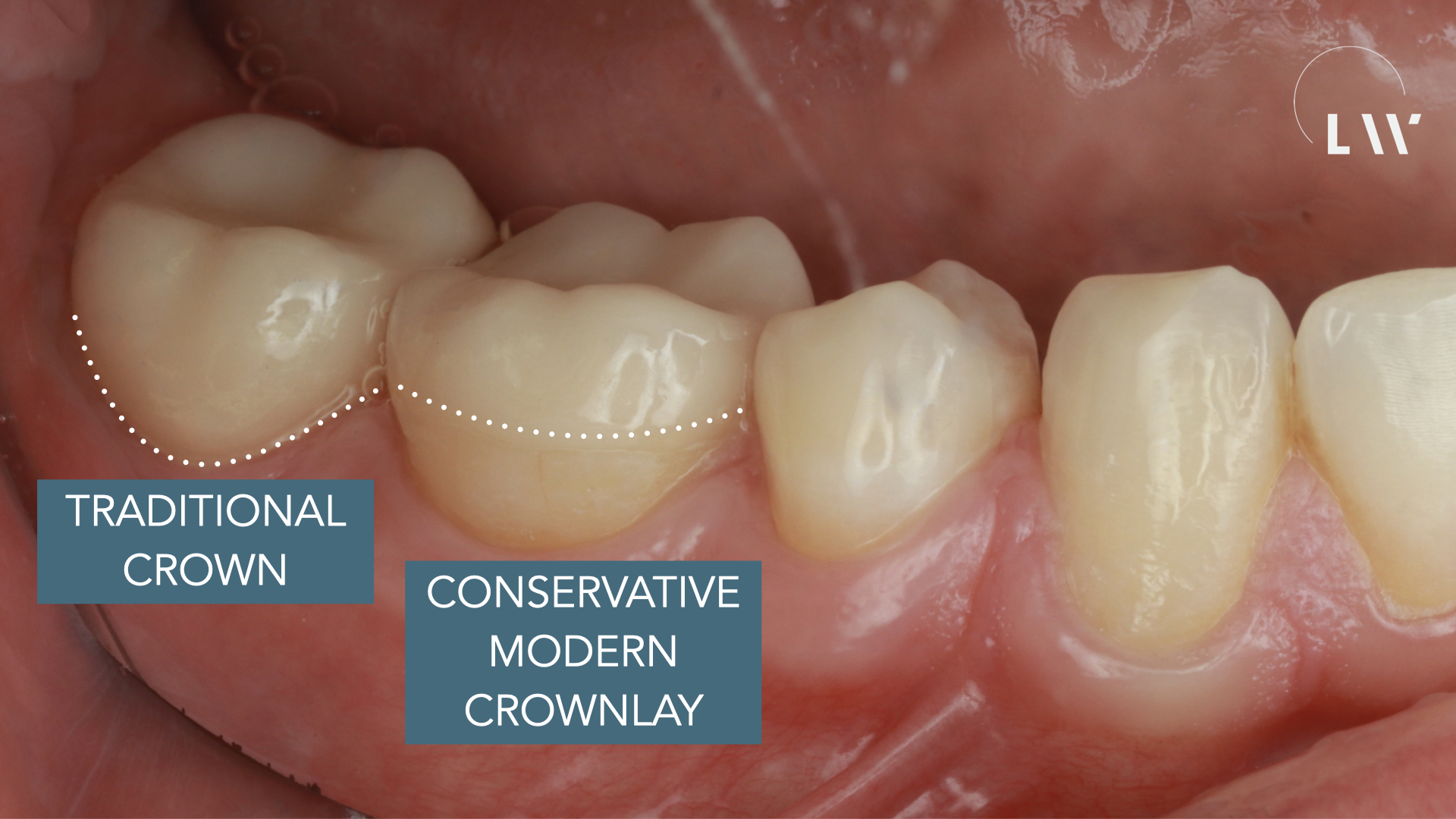
When the full tooth does not need coverage, an inlay or onlay may preserve more natural structure.
What Are Inlays & Onlays?
Inlays and onlays are custom restorations for teeth in the middle ground between a filling and a crown.
An inlay repairs the inner chewing surface of the tooth. An onlay covers a larger area and may protect one or more weakened cusps.
They are often used on molars and premolars, where chewing pressure is higher and a large filling may not give the tooth enough support.
Benefits of Inlays & onlays
Custom Fit for the Damaged Area
The restoration is shaped outside the mouth to replace the missing or weakened part of the tooth with a more controlled fit.
More Support Than a Large Filling
When a filling gets too wide, it may not support the tooth well. An inlay or onlay can reinforce the area more predictably.
More Tooth Preserved Than a Crown
If the full tooth does not need coverage, an inlay or onlay can protect the damaged area while keeping more natural structure intact.

Why Choose Livewell for Inlays & Onlays
Dr. Chris looks at what failed, what is still healthy, and how the tooth handles pressure.
If the tooth can be protected with a smaller restoration, we will explain that option clearly.
Natural enamel matters. We keep it when it can be preserved safely and predictably.
Back teeth do heavy work. Your restoration has to fit how you actually chew.

Getting Inlays & Onlays the Livewell Way
Fix the Weak Spot Before It Becomes a Bigger Problem
You do not need to know whether you need a filling, inlay, onlay, or crown before your visit.
Dr. Chris will evaluate the tooth, show you what is still healthy, and explain the option that gives the tooth the right support without making treatment bigger than it needs to be.

Inlays and onlays can last for years with proper care. Their lifespan depends on the material, bite forces, oral hygiene, grinding habits, and regular dental maintenance.
An inlay repairs the inner chewing surface of a tooth. An onlay covers a larger area and may protect one or more weakened cusps. Both are custom restorations used when a regular filling may not be enough.
They can be better when the damaged area is too large for a standard filling to support well. A small cavity may still only need a filling, but a wider or weaker area may need a custom restoration.
Treatment is done with local anesthesia, so you should not feel pain while the tooth is being prepared. Mild soreness or temperature sensitivity can happen afterward while the tooth adjusts.
A crown may be recommended when the tooth is cracked, heavily weakened, root canal-treated, or missing too much structure for a partial restoration to support predictably.
Yes. The restoration is designed to match your tooth color and shape. The goal is for it to blend with the tooth while restoring strength and function.