





.svg)

Signs You Need a Root Canal
Severe Tooth Pain That Won't Go Away
Pain that lingers, throbs, or wakes you up is not normal. Tooth pain that persists without a clear trigger or that doesn't respond to over-the-counter relief is a sign the nerve inside the tooth is compromised and needs to be addressed.
Gum Swelling or a Visible Bump
Swelling near a tooth - especially a raised bump on the gum that looks like a pimple - often indicates an abscess. This is the body trying to drain an infection that has spread beyond the tooth root. It needs treatment, not time.
Persistent Sensitivity to Heat
Cold sensitivity is common and often minor. Sensitivity to heat that lingers after the source is removed is a more specific indicator of pulp involvement. If hot food or liquid causes pain that stays for more than a few seconds, the nerve may already be damaged.

Quick Relief Before You Come In
These measures manage discomfort temporarily. They are not a substitute for treatment.

Over-the-Counter Pain Relief
.svg)
Cold Compress

Saltwater Rinse
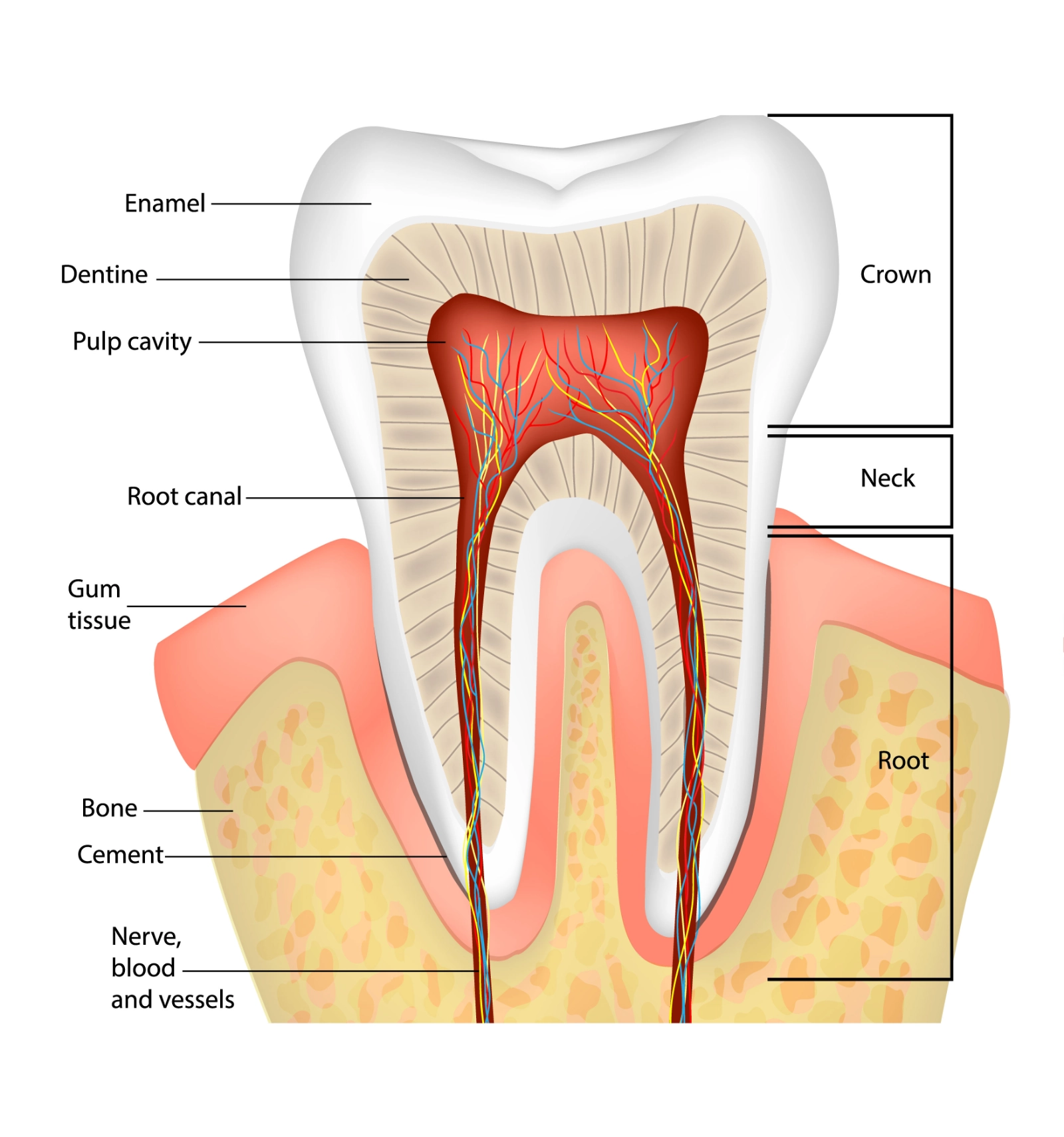
WHAT IS A ROOT CANAL?
A root canal is a procedure that removes infected or damaged tissue from inside the tooth - from the pulp chamber and the canals that run through each root. Once the infection is cleared, the space is cleaned, shaped, and sealed with a material that prevents reinfection.
The tooth itself stays in place. The root remains in the bone. What changes is that the tooth is no longer alive - it no longer has a nerve or blood supply. With a crown placed over it afterward, a root canal-treated tooth can function for decades.

Why Patients Trust Dr. Chris for Root Canal Treatment
"Most dentists refer root canals out because they lack the training or tools. I invested in both, so my patients never leave our office or wait in pain."
How We Treat a Problem Tooth at Livewell
.svg)

.svg)
.svg)
Root Canal vs. Extraction: Which Is Right for You?
| Feature | Root Canal + Crown | Extraction (No Replacement) |
|---|---|---|
| Preserves Natural Tooth | Yes | No (tooth is permanently lost) |
| Prevents Bone Loss | Yes (natural root stimulates bone) | No (bone begins shrinking immediately) |
| Typical Cost | $1,500-$2,500 total | $150-$300 (extraction only) |
| Treatment Timeline | 2-3 visits over 2-4 weeks | 1 visit |
| Recovery Time | 2-3 days of mild soreness | 3-7 days of swelling and soreness |
| Long-Term Consequences | Tooth functions normally for life with proper care | Bone loss, facial changes, difficulty chewing, need for expensive replacement |
| Long-Term Consequences | No impact on neighboring teeth | $$—moderate cost, but may need replacement |
| Insurance Coverage | Usually 50-80% covered | Usually 80-100% covered (but replacement is not) |
Most root canals take 60 to 90 minutes. Front teeth are faster, molars take longer. We schedule enough time so you never feel rushed.
The infection hurts. The root canal eliminates that pain. We use advanced anesthesia to ensure you're completely numb before starting.
Root canal treatment ranges from $800 to $1,500 depending on the tooth. The crown costs $1,200 to $1,800 separately. Most PPO insurance covers 50% to 80% of treatment.
In most cases, yes. Root canal treatment makes the tooth brittle. A crown protects it from fractures and extends its lifespan.
Yes, if you have local anesthesia only. If you choose sedation, you'll need someone to drive you home.
Most patients return to normal activities the same day or next day. Mild soreness for 2 to 3 days is normal and manageable with over-the-counter pain relievers.
Most PPO plans cover 50% to 80% of root canal treatment. We're in-network with Delta Dental Premier and United Healthcare. We bill and maximize all PPO insurances.
A root canal typically runs $1,200 to $1,500. Where you land in that range depends on which tooth is treated, how many canals are involved, and how severe the infection is — molars tend to be more complex to treat than front teeth.
Good to know: dental insurance often covers a significant portion of a root canal — typically 50% to 80%