




.svg)

Dental Emergencies Shouldn't Derail Your Life
A dental crisis has a way of hitting at the worst possible moment. A cracked tooth the morning of an important meeting. A throbbing abscess that kept you up all night. A crown that came off before a weekend event. Whatever the situation, the last thing you need is a practice that can't fit you in until next week.
At Livewell Dental, we hold space for urgent cases because we understand that dental pain isn't something you schedule around. Northern Virginia patients, whether they've been coming to us for years or are walking through our door for the first time, get seen quickly, treated thoroughly, and sent home with a clear picture of what comes next.
We also believe that emergencies are rarely random. Most of the time, something in the mouth has been quietly building toward that moment. Part of how we handle urgent care is making sure the underlying cause gets addressed so you're not back in the same situation in six months.
If You Need Us Today, We're Here

Sudden Tooth Pain or Swelling
A Broken or Knocked-Out Tooth
A Dental Abscess
A Damaged Crown, Filling, or Restoration
A Tooth That Feels Loose
Bleeding That Will Not Stop
Quick Relief Before You Come In
These measures manage discomfort temporarily. They are not a substitute for treatment.
Knocked-out tooth
Cracked or broken tooth
Abscess or infection
Lost crown or filling
Bleeding That Will Not Stop
Tooth That Feels Loose
The Approach That Makes Emergencies Less Likely
Here's why urgent cases are uncommon among our regular patients

Comprehensive Risk Assessment
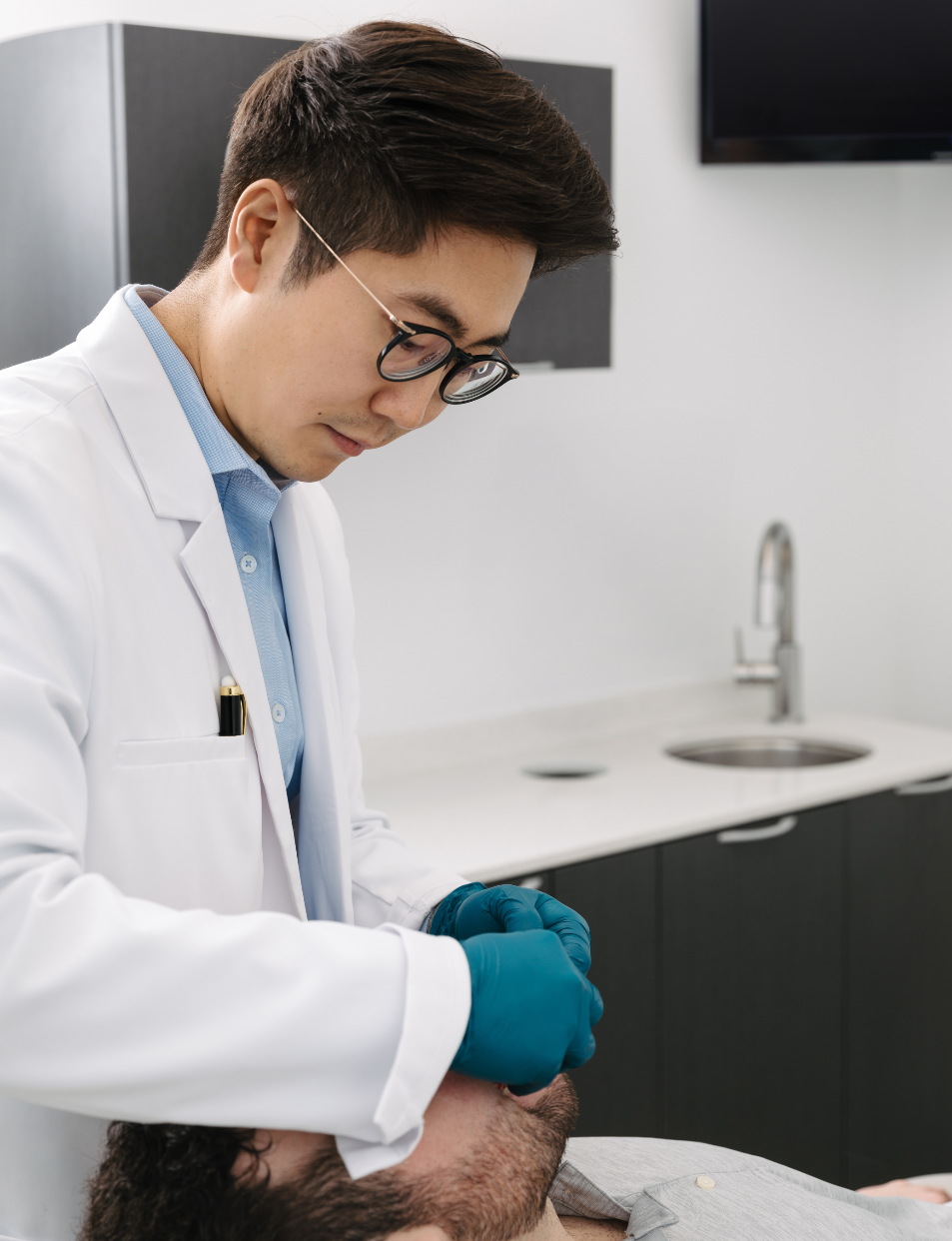
At every visit, Dr. Chris evaluates tooth structure, existing restorations, and bite patterns to identify what's under stress before it fails.

Advanced Technology & Surgical Techniques
High-resolution imaging and precision instrumentation mean faster recovery, less post-procedure discomfort, and restorations that hold up.

Attention to Function & Aesthetics
Every restoration, whether a single crown or a full-mouth case, is designed to work correctly in your bite and look natural in your smile.

One-Patient-at- a-Time Focus
No double-booking. When you're in the chair, you have Dr. Chris's complete focus. That translates directly to better care and fewer complications.
Comfortable Care, Even When You're Anxious
If fear or pain has kept you from the care you want, you have options. Your sedation is led by a physician anesthesiologist, so you can stay calm while we take care of your tooth.

Meet Dr. Melody Akhavan, Your Sedation Specialist


Emergencies Don't Wait. Neither Do We.
Every hour you wait with an abscess, a broken tooth, or severe pain, the situation gets harder to manage. We see urgent cases the same day, handle everything in-house, and make sure you leave knowing exactly what happened and what comes next.
- No referrals. Dr. Chris handles root canals, extractions, and restorations in the same visit
- Same-day appointments with one patient at a time, you get his full attention, not whoever is free
- Fellow, Academy of General Dentistry (FAGD), the training and tools to manage what walks in the door

Any situation causing significant pain, visible damage, swelling, or that affects your ability to eat or speak comfortably qualifies as an emergency. Broken teeth, dental abscesses, lost crowns or bridges, and severe tooth pain all warrant same-day attention. When in doubt, call us and describe what's happening.
Yes. We accept new patients for emergency appointments. If you're in the Northern Virginia area and dealing with urgent dental pain, call us directly and we'll do our best to get you in the same day.
Significant facial swelling alongside a dental abscess can indicate the infection is spreading beyond the tooth. This requires urgent attention. If you're experiencing swelling affecting your eye, jaw, or neck, go to an emergency room immediately and let them know it's dental in origin.
We use local anesthesia for all emergency procedures, and sedation options are available for patients who are anxious or in significant discomfort. We won't rush through an emergency visit and we won't start working until you're comfortable.
Pick the tooth up by the crown, not the root. Rinse it gently without scrubbing. If possible, place it back in the socket or keep it submerged in milk or saliva. Call us immediately. The window for saving a knocked-out tooth is narrow, typically under an hour, so speed matters.