



.svg)

What Is Scaling & Root Planing?
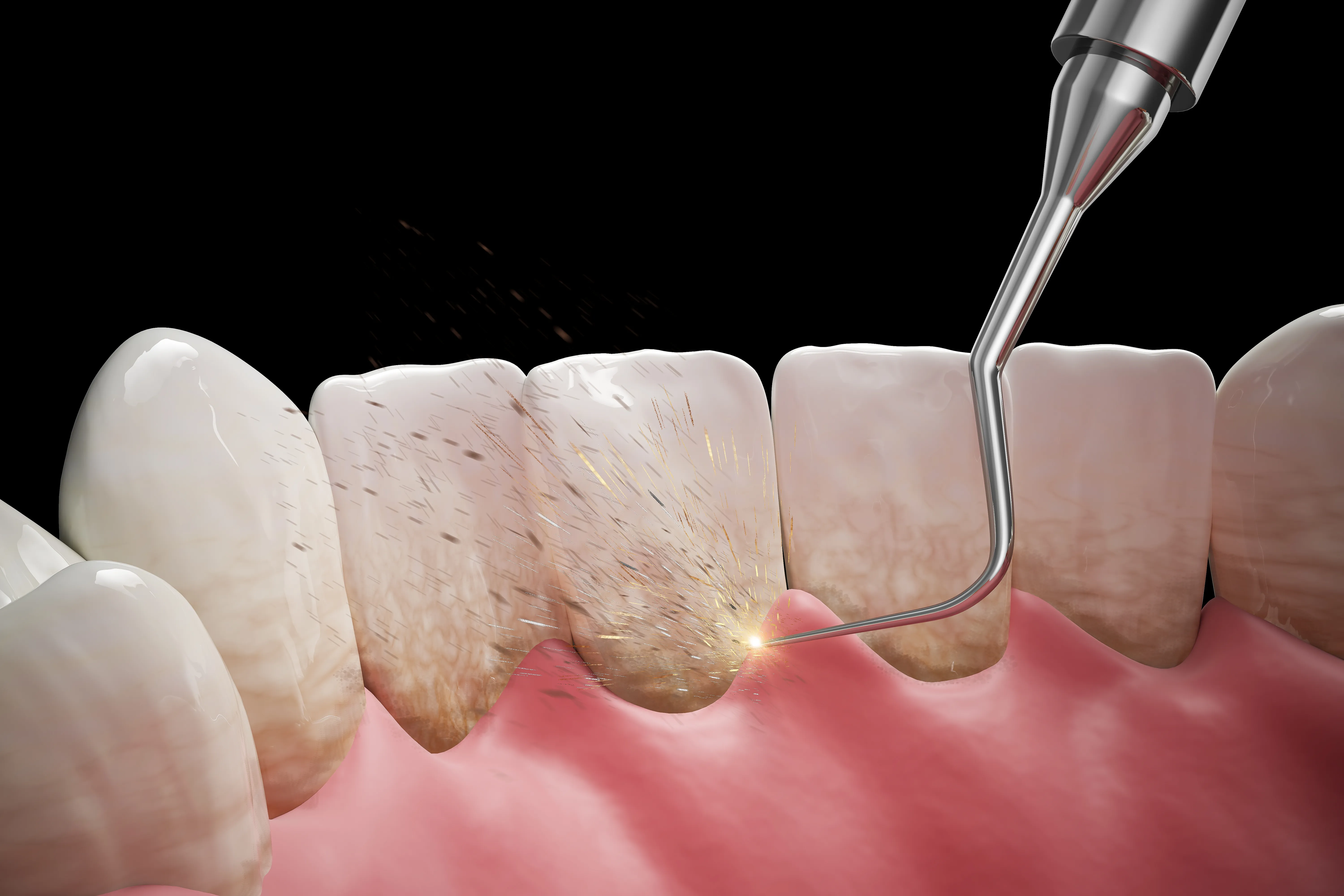
Scaling and root planing is a non-surgical deep cleaning used to treat gum disease.
When plaque and tartar collect below the gumline, the gums can become inflamed and pull away from the teeth. This creates deeper pockets where bacteria can hide and cause more damage.
Scaling removes buildup from the teeth and below the gums. Root planing smooths the root surfaces so the gums can heal and reattach more closely to the teeth.
Signs Your Gums May Need Deeper Care

Bleeding gums are often a sign of inflammation and should not be ignored.
Gum irritation can mean bacteria are collecting below the gumline.
Persistent bad breath can be linked to bacteria trapped in gum pockets.
As gum disease progresses, it can affect the bone and tissues that hold teeth in place.

Benefits of Scaling & Root Planing
Removes Deep Bacterial Buildup
Prevents Tooth and Bone Loss
Supports Healthier Breath and Gums

Gum Disease Treatment That Looks Beyond the Cleaning
At Livewell Dental, scaling and root planing is not treated like a routine cleaning. It is part of a larger plan to protect your teeth, gums, bone, and overall health.
We take time to explain what your gum measurements mean, where infection is present, and how to keep the disease from coming back after treatment.
Trusted by Patients Who Want Healthier Gums, Not Guesswork
Patients choose Livewell Dental because they want to understand what is happening below the surface. Gum disease can be quiet at first, but the damage can become serious without the right care.
Our team helps you take control early with honest guidance, thorough treatment, and a plan to keep your gums healthier over time.
A routine cleaning removes plaque and tartar from the surfaces of your teeth above and just at the gumline. Scaling and root planing goes deeper. It removes bacterial buildup from below the gumline and along the roots, where a regular cleaning cannot reach. It is prescribed when gum disease has already progressed and pockets have formed between your teeth and gums.
For most patients, yes. Once the bacterial buildup is removed and root surfaces are smooth, gum tissue can begin to reattach and inflammation can resolve. Healing depends on the severity of the disease, your home care habits, and whether you return for follow-up visits. Some patients see significant improvement. Others with advanced disease may need additional treatment.
The procedure is done under local anesthesia, so you should not feel pain during treatment. Some sensitivity and mild soreness for a few days after is normal as tissue heals. Most patients manage this with over-the-counter pain relief. If you experience sensitivity to cold after treatment, it usually resolves within a few weeks.
Most cases are completed in two visits, treating one side of the mouth per appointment. This allows for proper anesthesia and gives treated tissue time to begin healing before the second side is addressed. A follow-up evaluation is typically scheduled four to eight weeks later to assess how the gums have responded.
Yes. Scaling and root planing treats the current infection but does not prevent future gum disease. Consistent home care, regular professional cleanings (usually every three to four months for the first year), and ongoing monitoring are essential. Patients who maintain consistent follow-up care have the best long-term outcomes.
If gum disease has been diagnosed, yes. Gum disease does not resolve on its own. Without treatment, it progresses. Bone loss and attachment loss are permanent. Teeth can loosen and eventually be lost. Gum disease has also been linked to heart disease and diabetes. Treating it early is significantly less invasive and less costly than treating advanced disease.