



.svg)

Your Gum Line Frames Everything
Most people never connect their smile concerns to their gum line. Too much tissue makes teeth look short and crowded. Too little leaves roots exposed and teeth vulnerable to sensitivity, recession, and long-term structural damage. Either way, the foundation of your smile is telling a story that deserves a proper answer.

At Livewell, gum procedures are never an afterthought. We treat them with the same care and intention as everything else we do.

Care That Starts With the Right Credentials
Board-Level Credentials, Patient-Level Attention
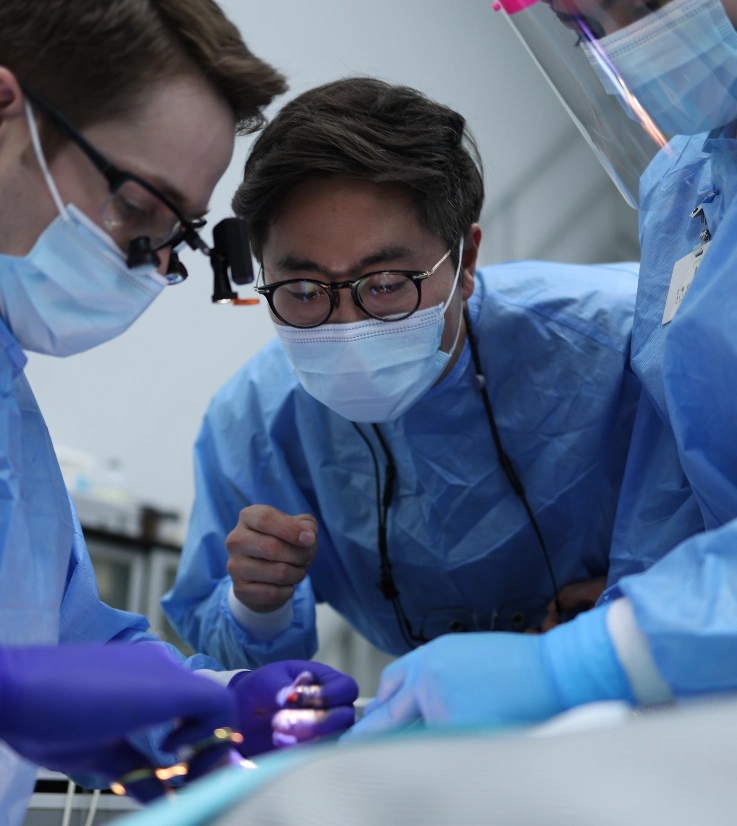
Most practices treat gum procedures as a cosmetic add-on or a quick fix before moving on to something else. At Livewell, every gum case is planned with the same intention and precision we bring to our most complex restorative work. You are not a procedure on a schedule. You are a patient with a specific anatomy, a specific history, and a result worth getting right.
What that means for you as a patient:
It means your procedure is guided by a surgeon who treats tissues gently, thinks long-term, and plans everything based on biology, not shortcuts. We evaluate your bone, tissue type, bite pressure, and smile line before making a single incision. And we work slowly and intentionally, one patient at a time.
Gum Services at Livewell, Explained
Gum Grafting

Replaces missing or thinning gum tissue to protect your teeth and roots from further exposure and damage. Without adequate tissue support, teeth become vulnerable to recession, sensitivity, and long-term structural compromise. We use carefully selected graft materials and refined techniques to restore both the strength and the natural appearance of your gum line, leaving you with a result that functions as well as it looks.
Esthetic Crown Lengthening

When excess gum tissue covers too much of your tooth surface, your smile can look short, disproportionate, or simply hidden behind your gums. This procedure carefully reshapes and repositions the gum line to reveal more of your natural tooth structure, creating better proportion and a more confident, complete smile. Best suited for a gummy smile, uneven gum levels, or cases where cosmetic work requires a better foundation.
Functional Crown Lengthening
Sometimes tooth structure sits too far below the gum line for a crown or restoration to bond to it correctly. Rather than compromise the restoration or the tooth, this procedure exposes the right amount of structure so that your dentist can restore it properly and permanently. Best suited for deep cavities, broken teeth, or structurally compromised existing dental work.
Gum Recontouring & Gingivectomy

Reshapes or removes excess gum tissue to create a more balanced, proportioned, and natural-looking gum line. In many cosmetic cases, this is the step that makes everything else look right. Small, precise adjustments to the gum line can dramatically change the way a smile reads, even without changing a single tooth. Best suited for minor aesthetic refinements or improving access for proper hygiene.
Is This the Right Treatment for You?
Gum treatment is not reserved for patients with obvious or advanced concerns. Some of the most common signs that your gum line needs attention are subtle enough to overlook for years.
You avoid smiling in photos because your gums show more than your teeth
Your teeth have been getting visibly longer over the past few years
Hot and cold sensitivity has become part of daily life
You want cosmetic work done but nobody has talked to you about your gum line first
A dentist told you a tooth cannot be saved and you want a second opinion
You want results that are stable five years from now, not just at your next checkup

The Livewell Way
Gum procedures performed at Livewell are not cosmetic shortcuts or quick fixes added on to fill an appointment. They are precise, intentional interventions planned around your long-term oral health and executed with a standard of care that most general practices simply are not equipped to offer. Every case is treated as its own, because no two patients present the same tissue, the same bite, or the same goals.
- Advanced Training. Fellowship trained in implantology and general dentistry.
- Surgical Precision. Many gum procedures can be planned and performed in-house by Dr. Chris.
- One Patient at a Time. Your procedure is never rushed or competing with another appointment.
- Fully Documented. Every case is photographed and measured from start to finish.
Which Gum Treatment Is Right for You?
Gum Grafting | Esthetic Crown Lengthening | Functional Crown Lengthening | Gum Recontouring and Gingivectomy | |
|---|---|---|---|---|
| Primary goal | Rebuild lost gum tissue around exposed roots | Reshape gum line to reveal more natural tooth | Expose tooth structure below the gum for crown placement | Remove excess or uneven gum tissue |
| Surgical? | Yes | Yes | Yes | Minor, often scalpel or laser |
| Involves bone? | Rarely | Sometimes | Yes, in most cases | No |
| Recovery time | 1 to 2 weeks | 1 to 2 weeks | 1 to 2 weeks, longer before crown placement | A few days |
| Appearance impact | Restores natural gum margin | Longer, more proportionate teeth | Functional first, some esthetic benefit | Cleaner, more symmetrical gum line |
| Addresses sensitivity? | Yes, covers exposed roots | No | No | No |
| Required before other work? | Often before implants in thin tissue sites | Often before veneers or cosmetic crowns | Required before crown on damaged tooth | Sometimes before cosmetic restorations |
| Best for | Recession, exposed roots, sensitivity, tissue loss | Gummy smile, short teeth, cosmetic prep | Deep decay, fractures below gum line, unrestorable crowns | Uneven margins, hygiene access, minor esthetic refinement |
| Approximate starting investment | Varies by number of teeth | Varies by scope | Varies by case | Varies by scope |
A gum graft is a procedure that restores healthy gum tissue where it has receded or thinned. We use either your own tissue (usually from the roof of your mouth) or safe, biologically compatible donor material to rebuild strong, protective coverage around your teeth or implants.
Why it matters: Recession isn’t just cosmetic—it can lead to root exposure, sensitivity, and eventual bone loss. Grafting helps prevent that.
Gum grafting moves tissue to areas where the gum line has pulled away from the tooth. The tissue source is either the palate or a processed donor material. Once it integrates with the existing tissue, it covers exposed root surfaces and creates a stable margin that resists further recession.
Recession has several causes including overly aggressive brushing habits, naturally thin gum tissue, shifting teeth that move roots outside the bone envelope, and bacterial infection that slowly destroys the supporting structure. Identifying the cause is the first step because it determines whether the recession is likely to continue or has stabilized.
The procedure is done under local anesthesia so you will not feel the surgery itself. The first few days of recovery involve tenderness, particularly at the donor site on the roof of the mouth if that tissue source is used. Most patients manage comfortably with standard over-the-counter pain relief and find the experience more manageable than they anticipated.
Gum recession may continue over time, especially if the cause is still active. Exposed root surfaces are more vulnerable to decay, sensitivity, and structural problems than enamel. Treating recession while it is still limited often means a more straightforward graft. Waiting can lead to more tissue loss, possible bone involvement, and a more complex procedure.
Crown lengthening exposes more tooth structure by removing tissue and sometimes a small amount of supporting bone. It is done for two distinct reasons: functionally, to give a crown enough tooth to grip when damage or decay has extended below the gum line; esthetically, to balance a smile where excess tissue is hiding too much of the natural tooth.
Treatment for gum disease typically runs $3,500 to $5,000. Pricing depends on how severe the gum disease is, how many quadrants or teeth are affected, and whether your case needs non-surgical care (scaling and root planing) or surgical treatment (gum grafts, flap surgery).