

.svg)

Why Didn’t Anyone Ever Tell Me This Before?
Many dental visits focus on what is broken today, but not always on why it happened or how to keep the same problems from repeating. That can lead to frustrating repeat issues, surprise costs, and the feeling that you are always reacting instead of being in control.
We created the Dedicated Comprehensive Oral Evaluation, or dCOE, for patients who are ready to understand the full picture, especially those considering cosmetic dentistry, full smile makeovers, full mouth reconstruction, implants, or complex restorative care. Because lasting treatment begins with a clear diagnosis.
How the dCOE Works
Two visits. Full records. A clear diagnosis before treatment begins.
1. ARRIVAL
DATA COLLECTION
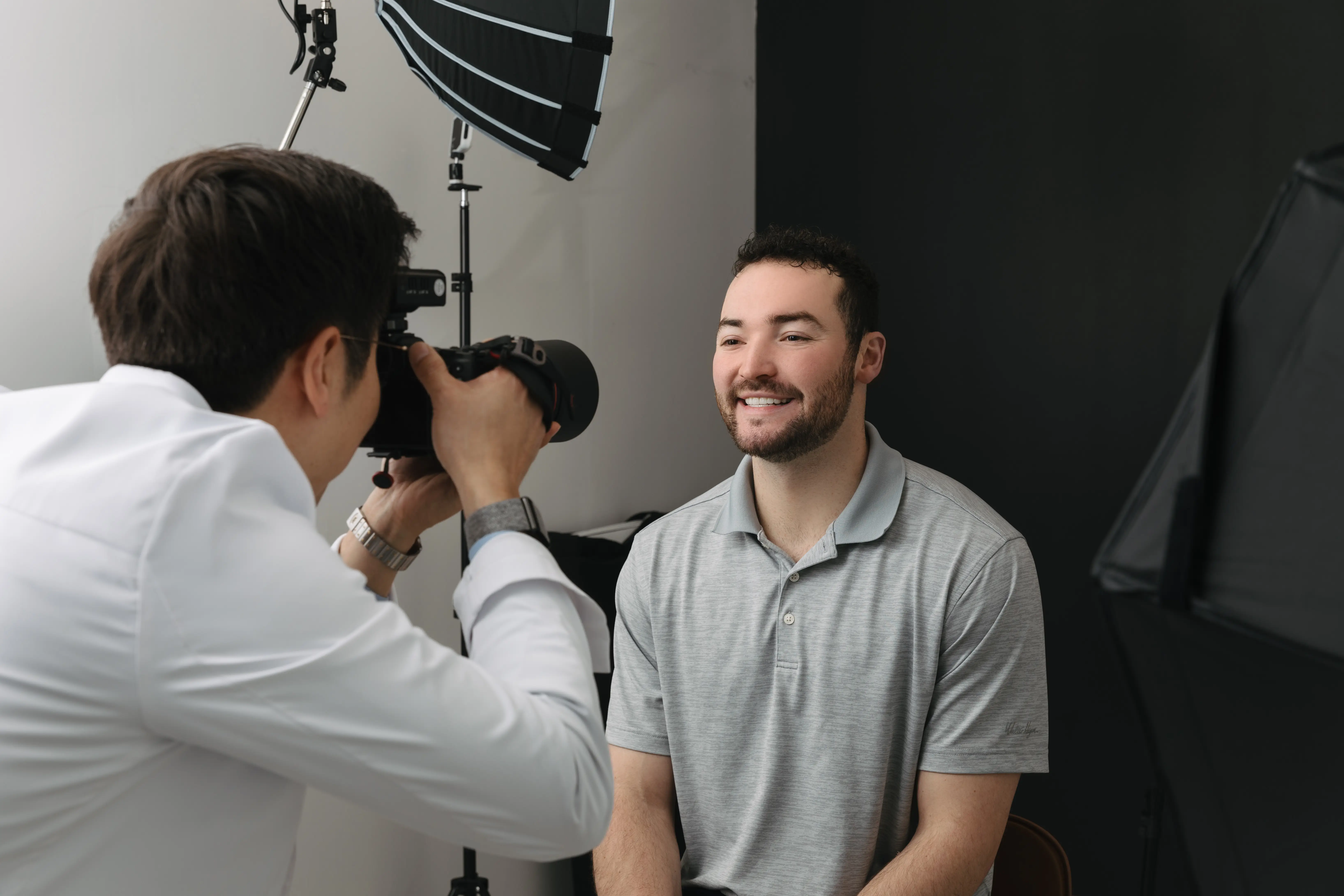
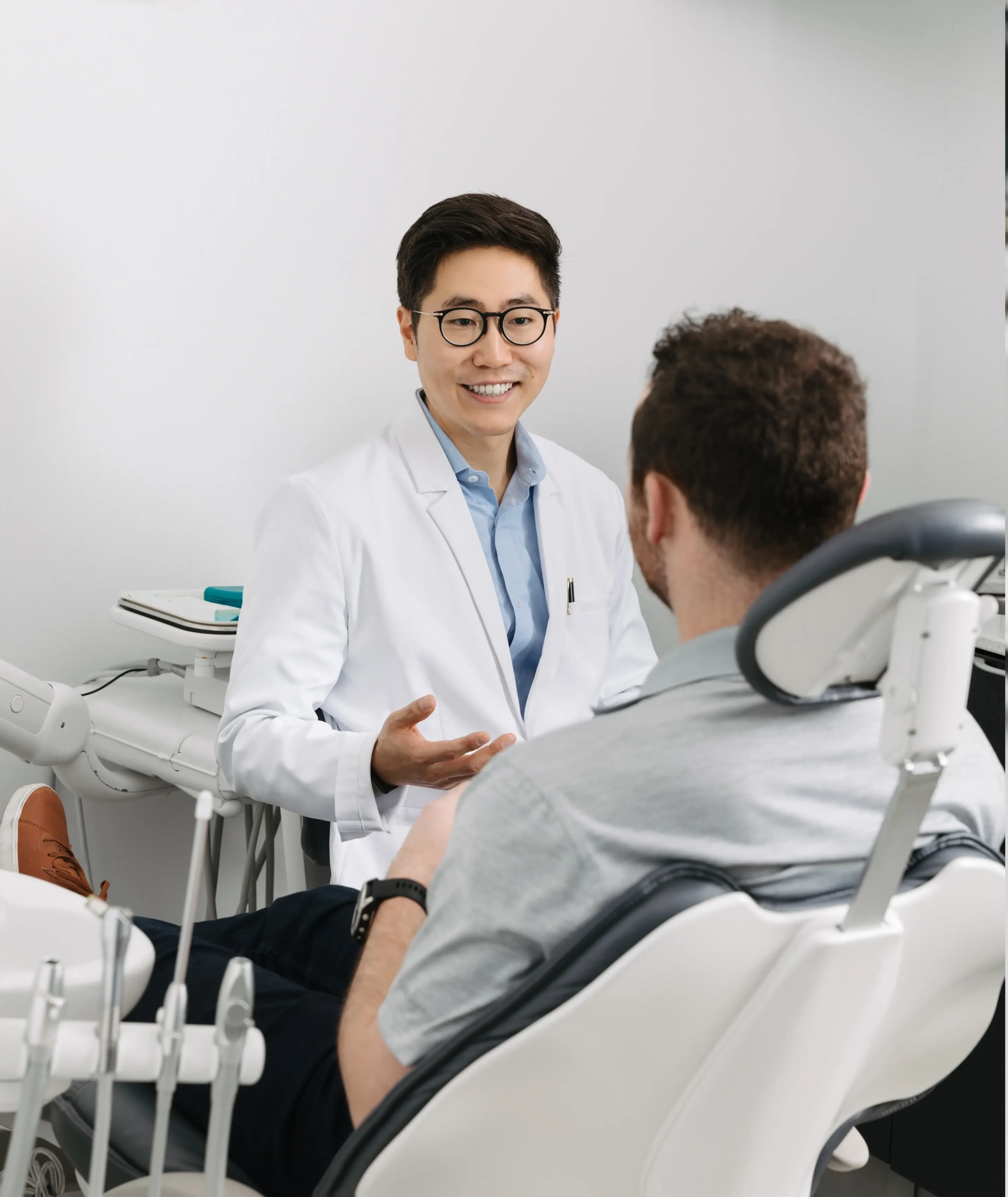
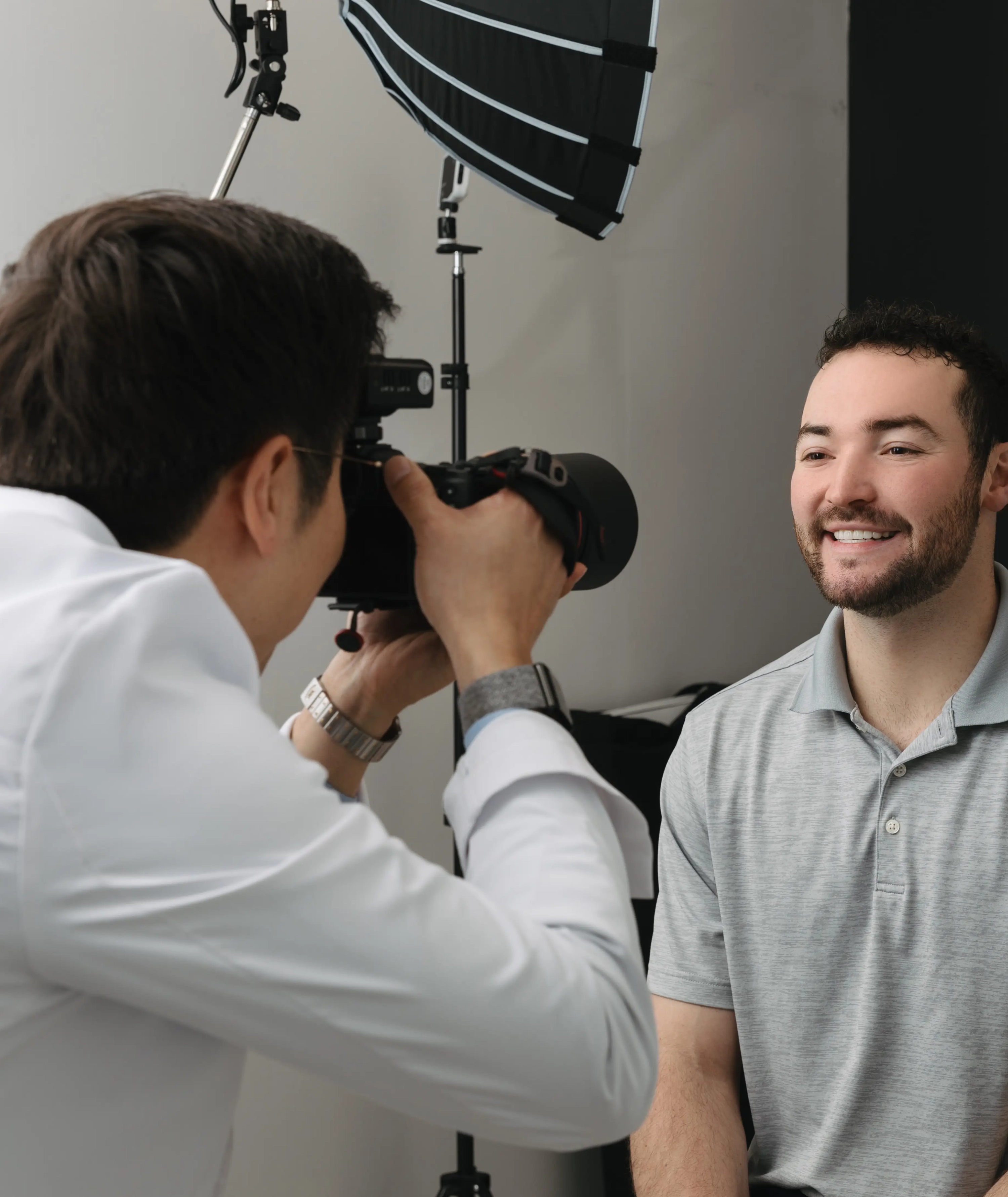
Your first visit is focused on understanding your mouth, your history, and your goals. We take time for a detailed conversation, a functional and medical review, digital scans, X-rays or CBCT imaging when needed, and a comprehensive photo protocol that documents your teeth, bite, smile, and facial balance.
After this visit, Dr. Chris and the team study the records carefully before your second appointment. The goal is to understand what is happening, why it is happening, and what options make sense before any treatment is recommended.
.svg)
2. CONSULT
CASE PRESENTATION
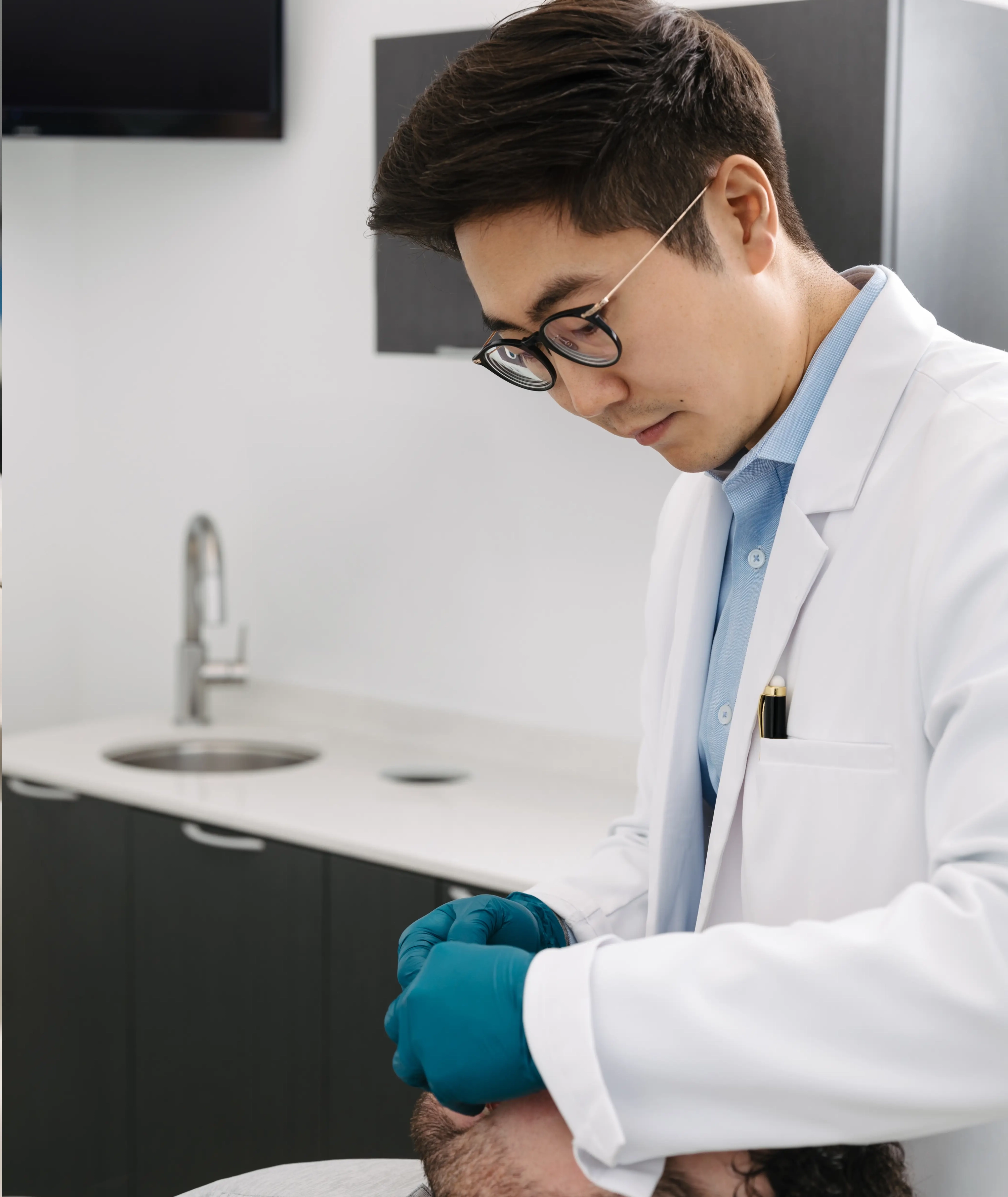
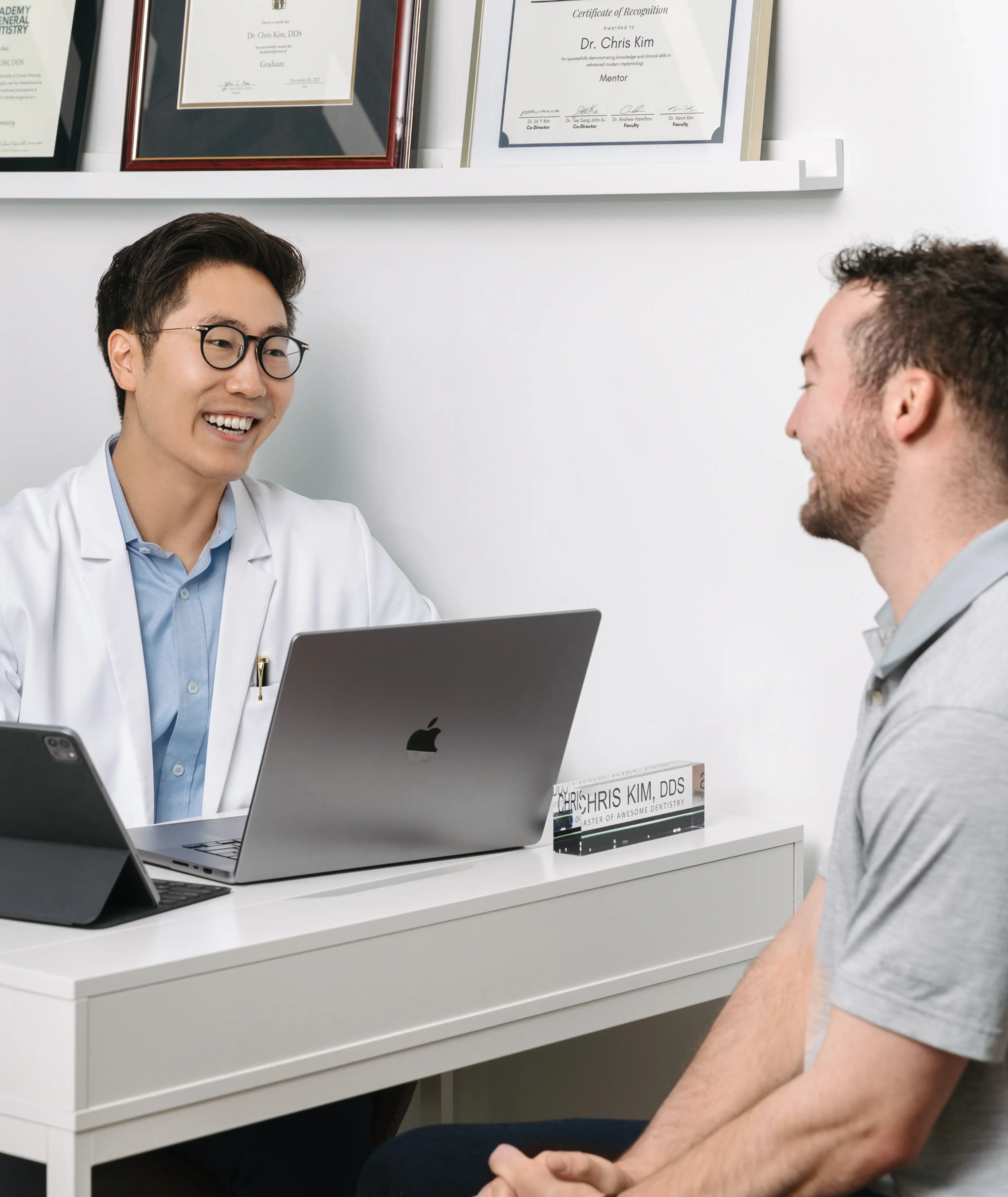
At your second visit, you and Dr. Chris review your records together on screen. You will see your photos, scans, X-rays, bite findings, and any areas of concern in clear language.
From there, we discuss your current health, function, comfort, and aesthetics. If treatment is recommended, your plan includes the proposed sequence, estimated timeline, available options, and financial breakdown. The goal is for you to understand the “why” behind every recommendation before making a decision.
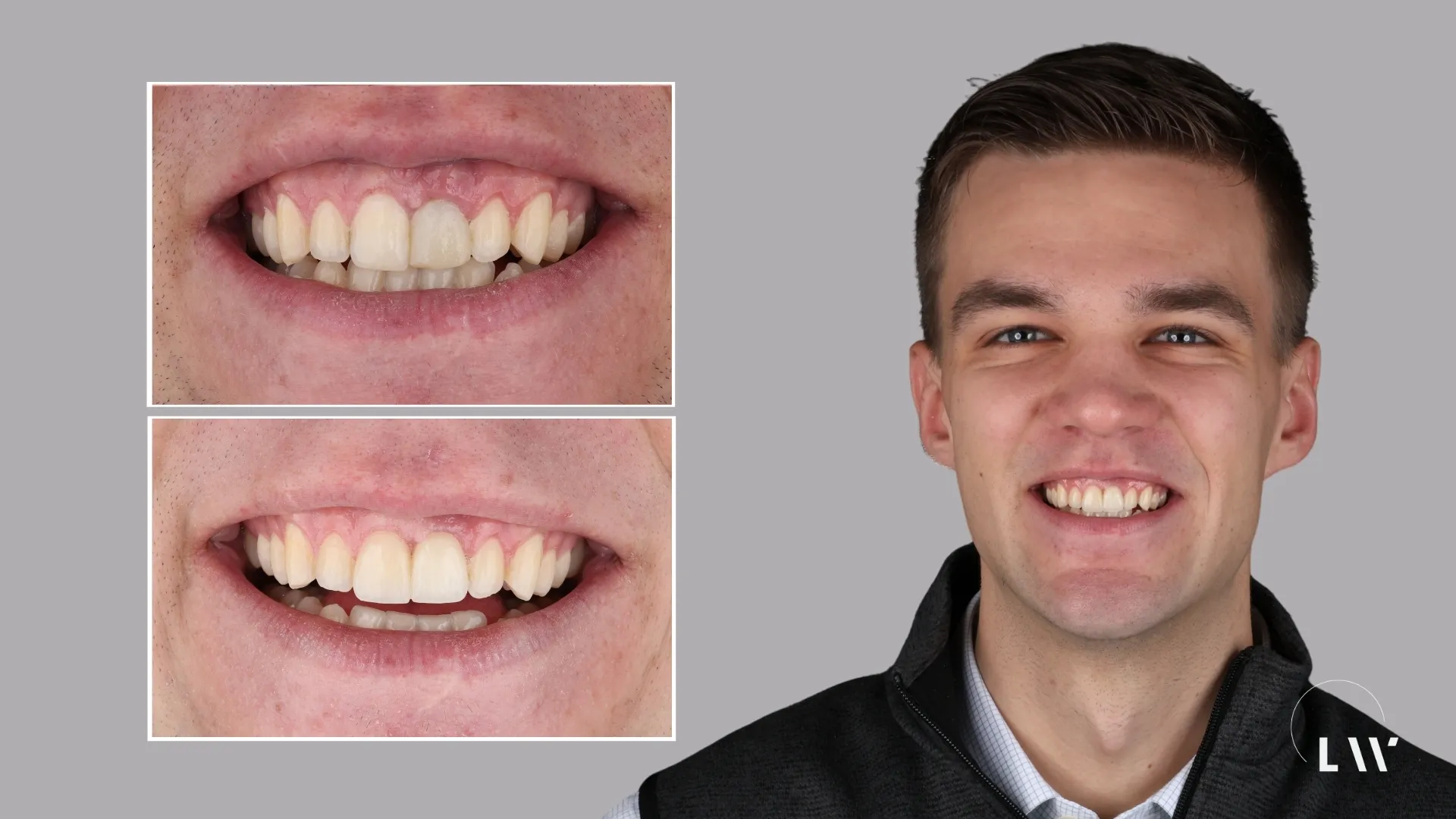
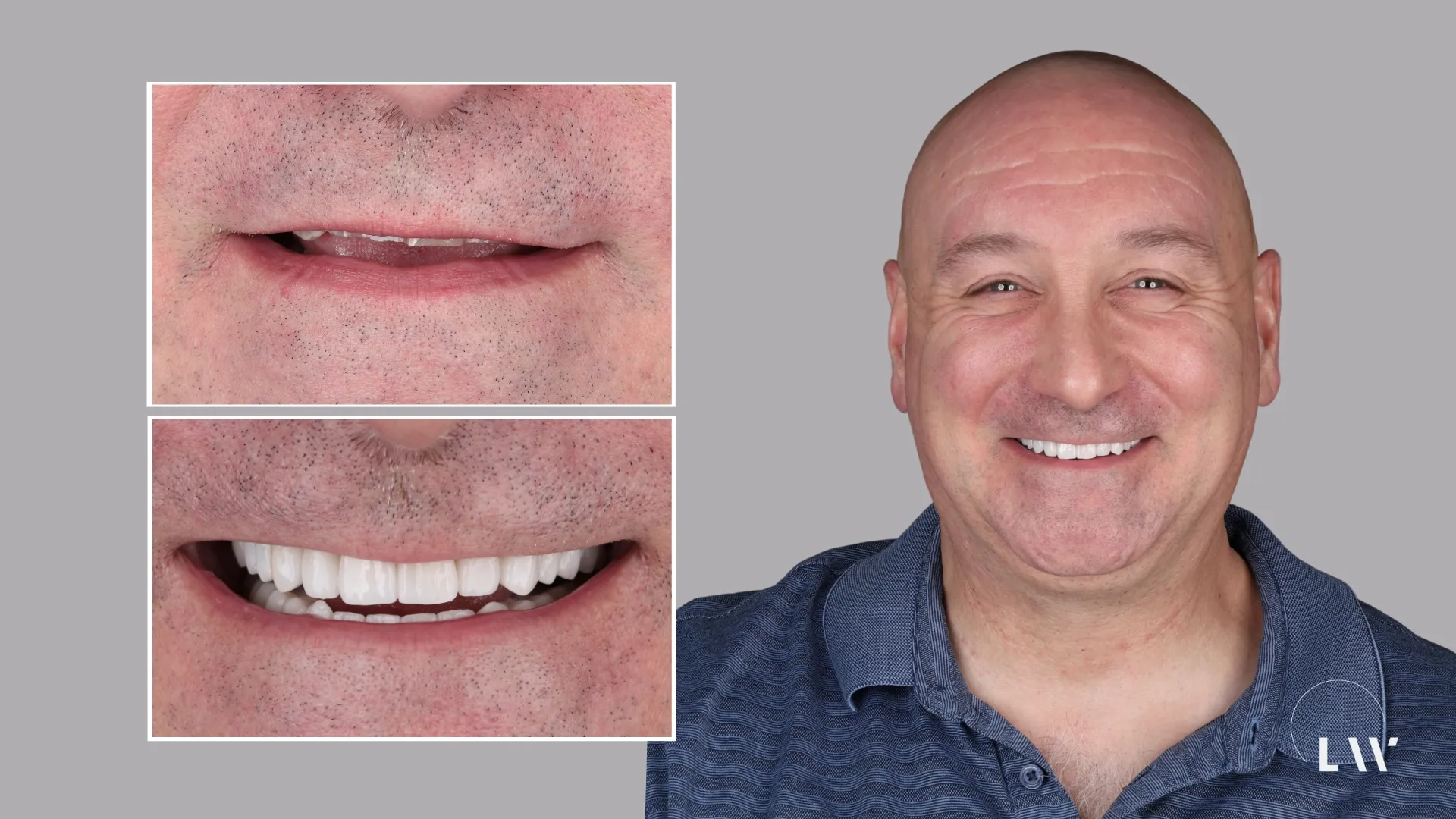
From Dental Problems to a Smile That Feels Like Yours
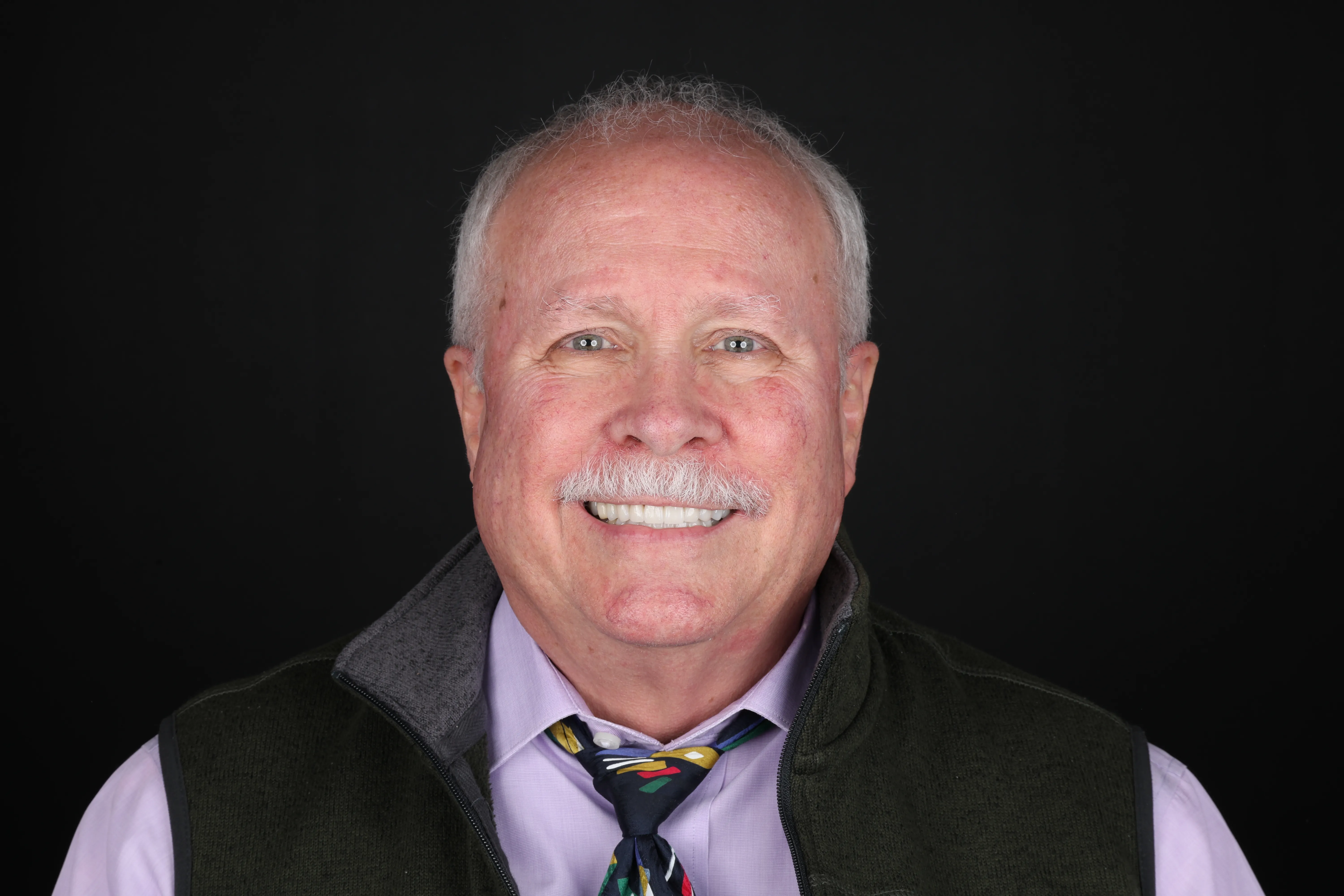
A full-smile transformation is not just about changing teeth. It is about restoring comfort, confidence, function, and the freedom to smile without thinking about it.

The dCOE is perfect for you IF…



.svg)

A Practice That Stays Small to Focus Big On You
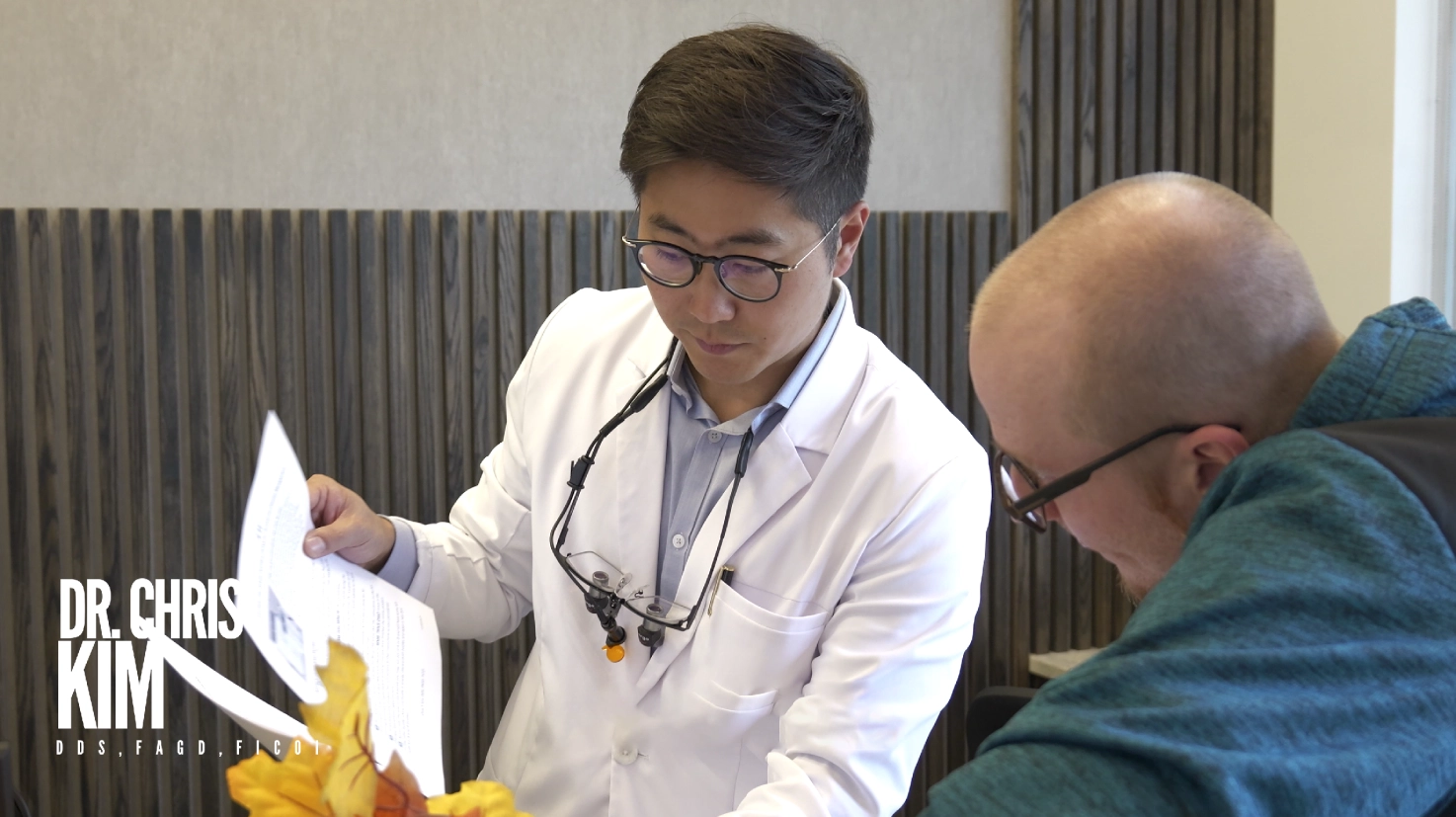
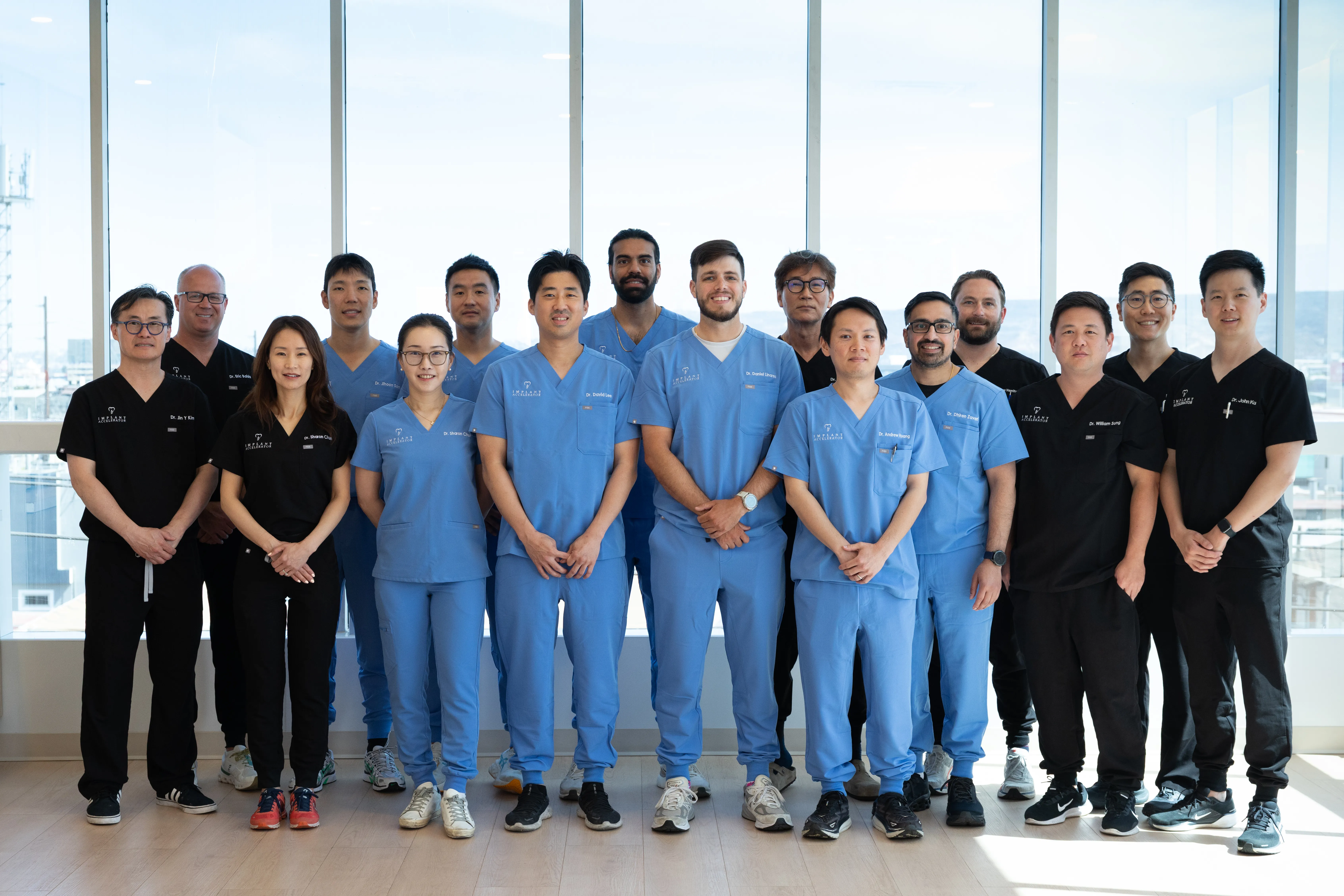
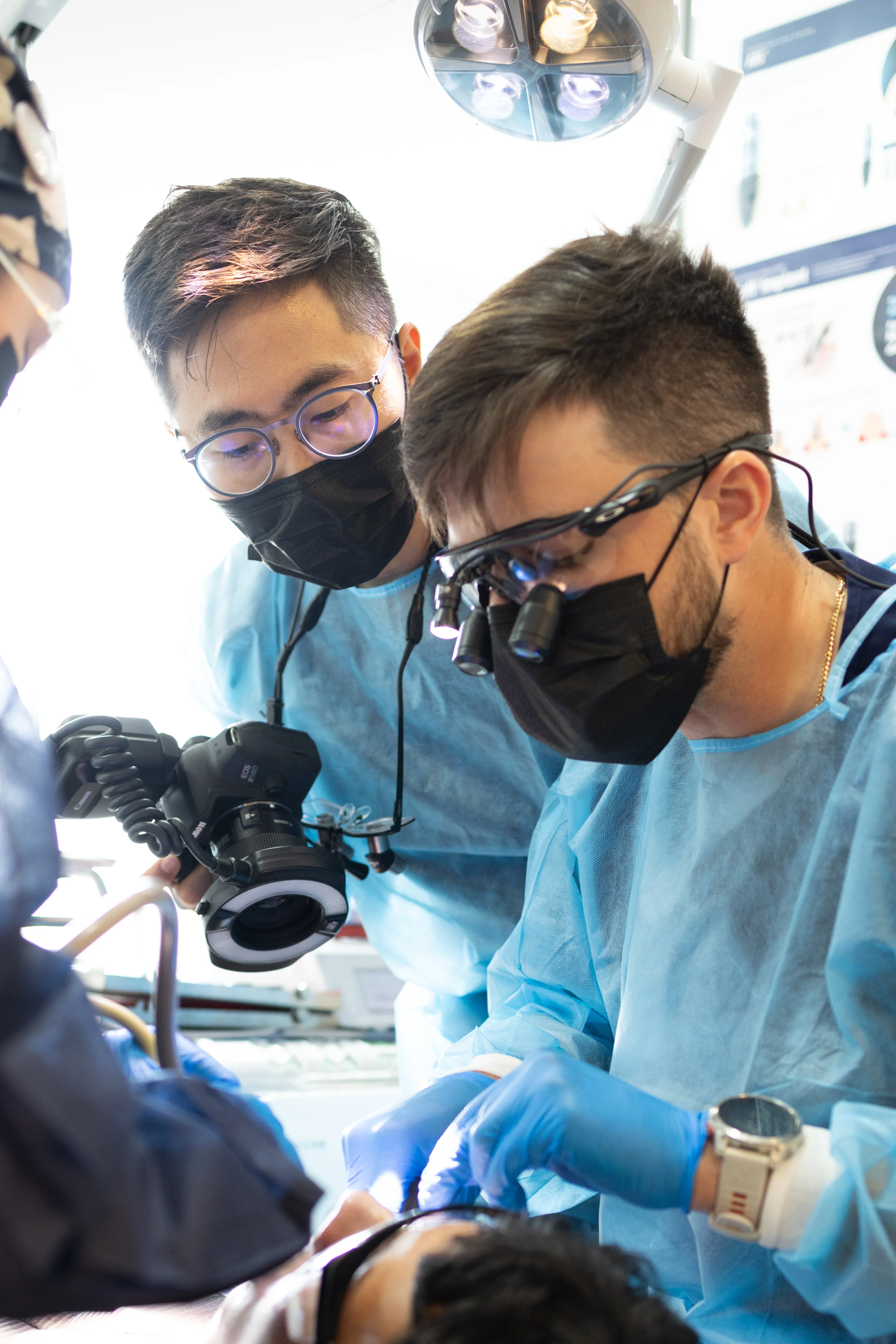
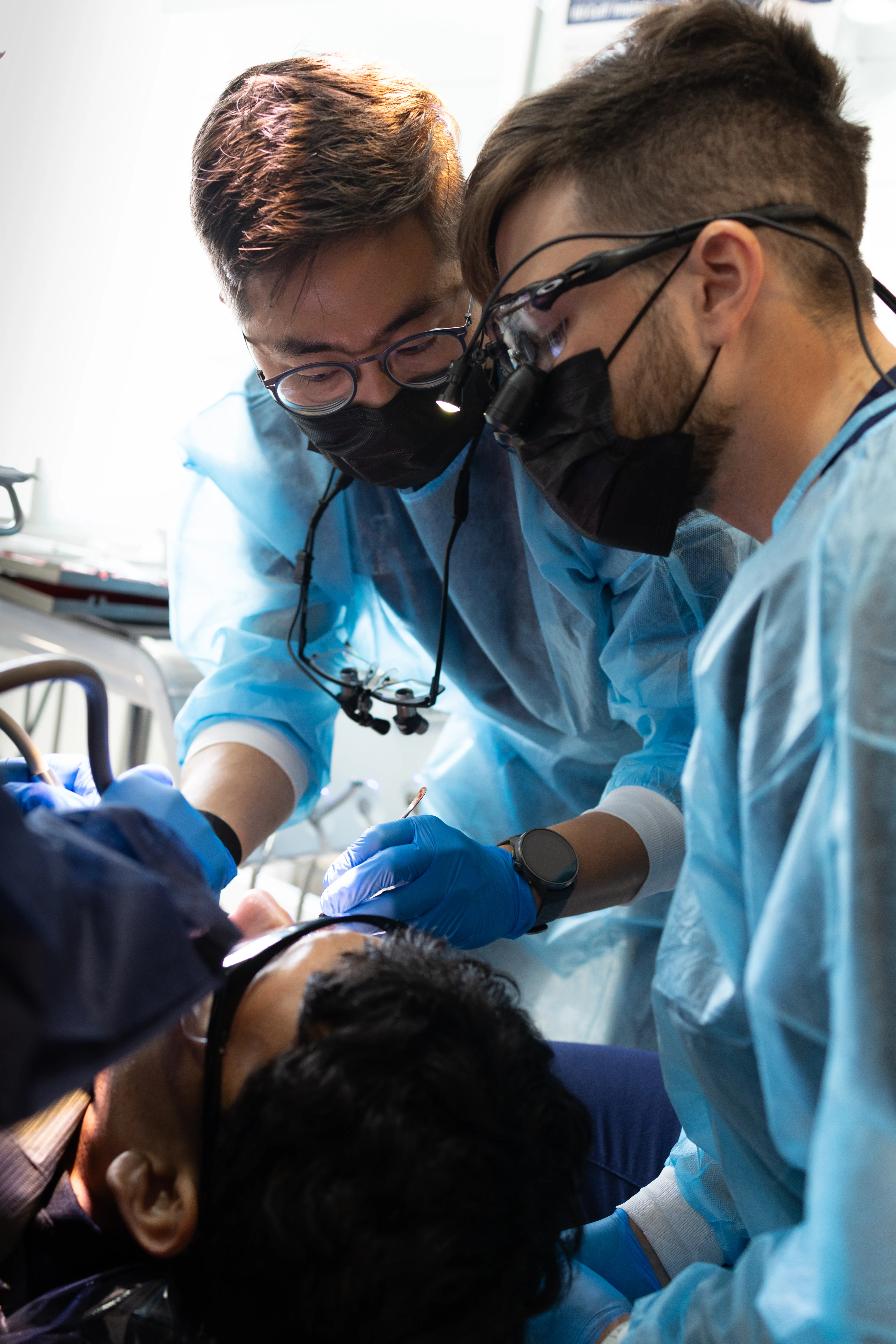
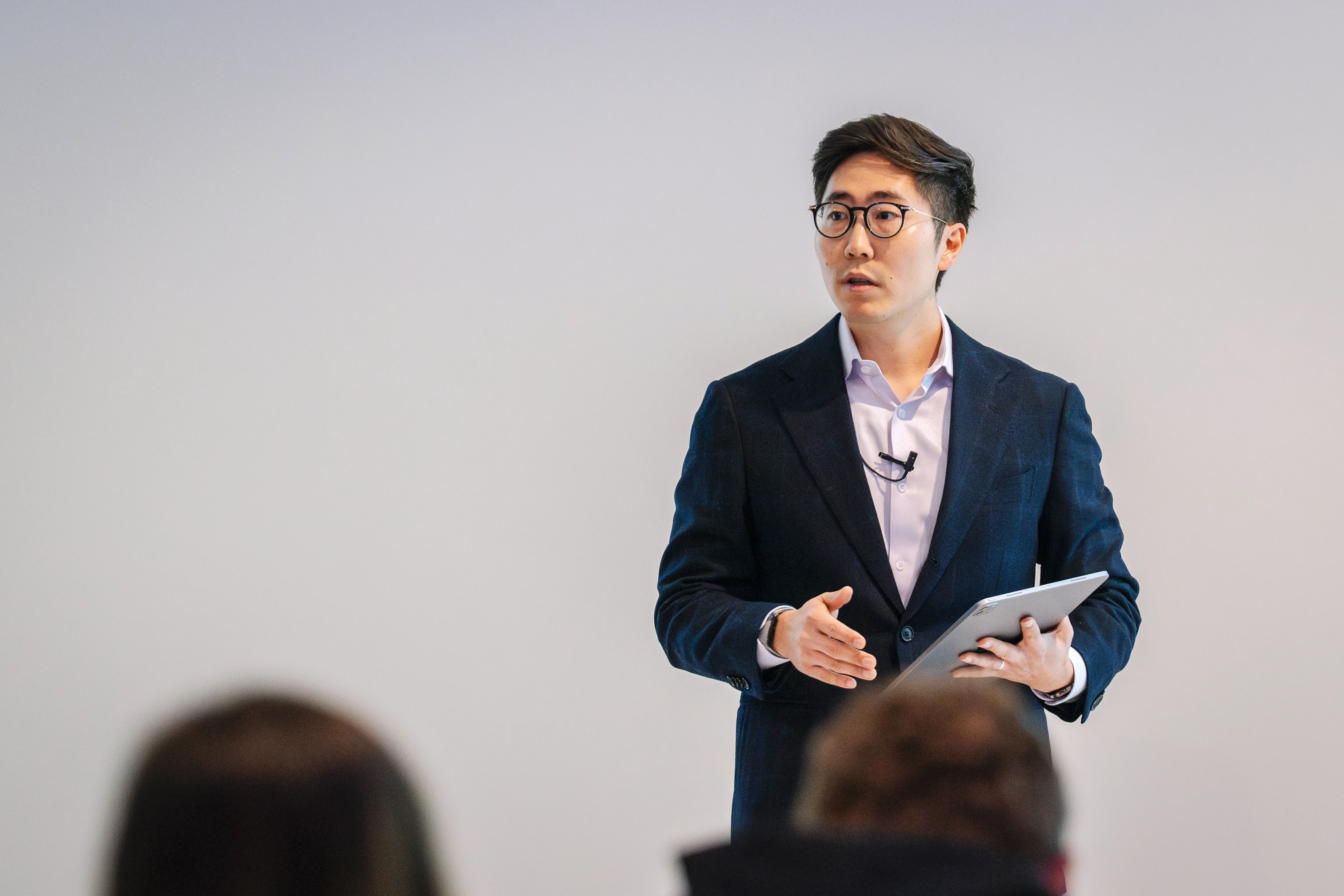
Dr. Chris leads each patient journey with intention, empathy, and advanced clinical training. As a Kois Center graduate, Fellow of the ICOI and AGD, and Clinical Instructor at Implant Accelerator, he brings comprehensive planning and careful documentation to complex cases at Livewell Dental.
- Board-Level credentials
Fellowship training in implantology and general dentistry, the standard most patients with complex cases specifically look for. - Surgical Precision
Gum procedures most GPs refer out, performed in house by Dr. Chris. - One Patient at a Time
Your procedure is never rushed or competing with another appointment. - Fully Documented
Every case is photographed and measured from start to finish.
Implant Experience That Extends Beyond the Practice
From Dr. Chris
“The best dentistry should feel invisible. You shouldn’t have to think about it every day. That’s our goal—quietly excellent care that supports your health and fits into your life without distraction.”

Before we begin any reconstructive treatment, we complete a comprehensive assessment—not just to plan the dentistry, but to understand why things have broken down in the first place. This step is non-negotiable because it’s how we ensure your treatment lasts and feels right for you.
Some of our must-do assessments include:
- Airway & Breathing Evaluation
Your bite, jaw position, and even tooth wear can be influenced by how you breathe. We screen for airway issues that could be contributing to grinding, fatigue, or relapse after treatment. - Bone Structure & Volume (CBCT Scan)
We use 3D imaging to evaluate the health and density of your jawbone—especially critical if implants are part of the plan. It also helps us avoid vital structures like nerves and sinuses. - Functional Bite Analysis
Using tools like the Kois deprogrammer, we assess whether your muscles and joints are in harmony. Many patients have bite-related issues they’ve adapted to over time—this helps us identify and correct them before building on top. - Gum Health & Inflammation Screening
We can’t build on a foundation of inflammation. Healthy gums are essential for long-term success, and we use salivary diagnostics or bacterial testing when needed to guide treatment. - Photo & Digital Records
High-resolution photography, 3D scans, and models allow us to design your treatment with precision and transparency. You’ll see what we see—and be part of the decision-making process.
We don’t believe in rushing. We believe in clarity—because that’s what leads to confidence, comfort, and results that last.
We believe in doing the right thing for the right person at the right time. That means we’re not just looking at teeth—we’re looking at the whole person when deciding whether a reconstruction is appropriate.
While we welcome a wide range of patients, there are certain situations where full reconstruction may not be in someone’s best interest at this time. These may include:
- Uncontrolled medical conditions — Certain systemic diseases (like poorly managed diabetes or autoimmune conditions) may delay healing or increase complication risks.
- Severe untreated psychological conditions — For patients navigating significant anxiety, depression, body dysmorphia, or PTSD, we may recommend stabilization and support from other healthcare providers first. This ensures dental treatment is done in a healthy, sustainable context.
- Unrealistic expectations — We’re here to restore health, function, and confidence—not create perfection. If someone is seeking a dramatic transformation without understanding the process, risks, or maintenance, we’ll take the time to pause and educate before proceeding.
- Lack of commitment to follow-up care — Reconstructive dentistry requires a partnership. Without a willingness to maintain, protect, and monitor the work long-term, even the best dentistry will eventually fail.
None of these are judgments. They’re simply part of doing responsible, ethical dentistry. Our goal is always the same: to help you succeed—not just at the end of treatment, but for years to come.
To deliver care that lasts—and feels good long after you leave the chair—we invest heavily in diagnosis and planning. Here are just a few of the tools we use to help us understand your unique situation and design a solution that’s built to last:
- Kois Deprogrammer
A custom-made bite appliance that allows your muscles to relax and reveal your true jaw position. This tells us if your bite is contributing to breakdown—and gives us a stable foundation before we build anything new. - Digital Intraoral Scanner
No goopy impressions here. Our scanner captures a 3D model of your teeth with high precision and comfort, helping us plan restorations with greater accuracy. - CBCT (3D X-ray Imaging)
Think of this as a 3D blueprint of your bone, nerves, and airway. We use it to plan surgeries, evaluate risk, and make decisions that protect both your health and longevity of your dental work. - High-Resolution Photography & Photo Studio
We document your smile in detail—both for communication and for smile design. This allows you to preview changes before we begin and helps us collaborate with our lab to achieve natural, lifelike results. - Digital Smile Design
Before we ever touch a tooth, you’ll be part of the process. We plan your new smile digitally, taking into account not just teeth—but your face, expressions, and personality.
These tools aren’t just about technology—they’re about intention. They give us clarity, precision, and a deeper understanding of what’s really going on—so your treatment is not just beautiful, but durable and aligned with your long-term health.
Every full-mouth case is different—but what’s consistent is that we take our time to do things right.
Most full reconstructions are completed over 1 to 12 months, depending on the complexity. Some cases are faster, others take longer—especially if we’re including implants, gum therapy, or bite correction.
We typically break treatment into phases, which allows for healing, precision, and collaboration. It also gives you the chance to feel the changes step by step—and stay involved in the process.
The timeline depends on things like:
- Whether we need to stabilize your bite or jaw joints first
- If implants are involved (and need time to heal)
- Whether there’s active disease or gum inflammation we need to treat first
- Your availability and pace of decision-making
We’ll walk through the roadmap together, so you’ll always know where you are and what’s coming next. This isn’t cookie-cutter dentistry—it’s personal, thoughtful, and designed for long-term success.
Yes—we do offer phased pricing when it’s appropriate.
In some cases, we can break treatment into quadrants or stages to help you move forward in a way that feels manageable—both clinically and financially. This approach works especially well when your case allows for it without compromising long-term results.
That said, we’re always careful to make sure phasing doesn’t mean compromising. Our priority is to treat the root cause, not just patch symptoms. So if breaking things up makes sense and still leads to a stable, predictable outcome, we’ll absolutely explore that with you.
Our commitment is simple: transparency, honesty, and a clear plan—so you always know what to expect, why we’re recommending something, and what the path forward looks like.
We don’t believe in one-size-fits-all solutions—especially when it comes to something as significant as full-mouth implants.
We may recommend full-mouth implant treatment when:
- Teeth are no longer restorable or would require repeated, invasive treatment to maintain
- There’s extensive infection, bone loss, or pain that affects quality of life
- The patient is looking for a stable, long-term alternative to dentures
- Function, comfort, and aesthetics can be better achieved with implants than with rebuilding compromised teeth
- There is a desire for a fresh start—with proper planning and maintenance going forward
That said, we’re not quick to pull healthy or savable teeth just for the sake of convenience or speed. We avoid full-mouth implants when:
- There are healthy teeth that can be predictably maintained
- The underlying issue can be corrected with more conservative or staged care
- The patient is not ready medically, emotionally, or financially to commit to the demands of implant therapy
- Expectations or goals don’t align with what full-arch implants can actually deliver
If your teeth are still structurally sound—or can be restored predictably—we often recommend rebuilding. That may mean a combination of crowns, bridges, bite therapy, and gum care to stabilize and strengthen what’s already there.
We choose this path when:
- Your teeth have a solid foundation, even if they’re worn or broken
- There’s not extensive bone loss or active infection
- You’re willing to invest in maintenance and follow-through care
- You value keeping what’s natural when possible
The benefit? You preserve your own biology, avoid unnecessary surgery, and still regain full function and aesthetics with thoughtful planning. For many people, this is the most conservative and long-term stable approach.
In some cases, the foundation simply isn’t stable enough to build on. If the teeth are too compromised, or repeated dental work would only offer short-term relief, full-mouth implants can offer a clean slate—with comfort, stability, and peace of mind.
We recommend this when:
- Most or all of your teeth are non-restorable or failing
- There’s significant pain, mobility, or infection
- Dentures are uncomfortable or limiting, and you want something more permanent
- You’re medically and emotionally ready to commit to surgical care and long-term maintenance
The benefit? Predictability. With proper planning, implants can restore your bite, chewing power, and confidence—often with fewer compromises than trying to salvage what’s already failing.
This is never a rushed decision. We look at your full picture—clinically, medically, financially, and personally. Then we walk you through the risks, benefits, and maintenance of each path.
Our only agenda is helping you choose the option that sets you up for long-term health, stability, and peace of mind.
Yes
We Don’t Just Restore Smiles—We Protect What Matters.
At Livewell, we believe there’s real value in preserving what nature gave you. That’s why our first instinct is not to pull teeth—it’s to understand them.
Whenever possible, we aim to save and restore your natural teeth. Why? Because your teeth are connected to your bone, your bite, your airway, and your overall health in a way that even the best implants can’t fully replicate.
We’ll always walk you through all your options—including implants when they’re appropriate. But we’ll also be honest about when conservative care can achieve the same goals with less risk and intervention.
This approach takes more time. It requires careful planning, deep diagnosis, and a real relationship. But the results? More trust. More predictability. More dignity in your care.
Because we’re not just here to rebuild—we’re here to protect what you already have, whenever we can.
Craftsmanship You Can See—and Feel.
Your dental work shouldn’t look like dental work. It should look like you.
That’s why we work with a small, trusted group of master dental technicians—people who treat each restoration like it’s their own. We don’t send cases to high-volume, overseas labs. We collaborate with partners who value precision, aesthetics, and personalization just as much as we do.
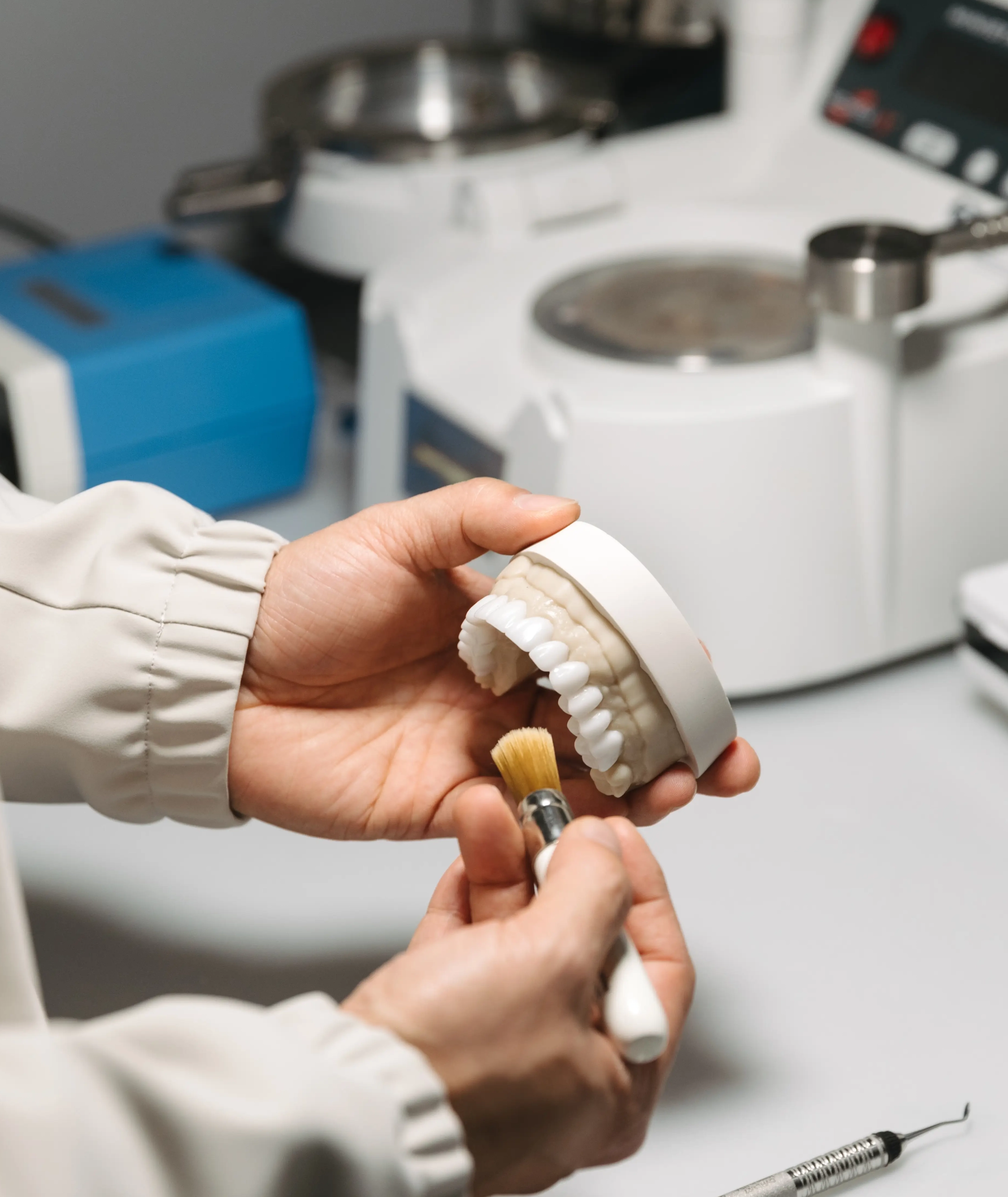
One unique part of our process is how we handle shade matching. Instead of relying on a technician’s guess or a basic color tab, we use advanced photo calibration technology that allows us to send ultra-precise color information to our lab. It captures the subtle tones, translucency, and character of your natural teeth—so the final result blends in seamlessly.
This means:
- No chalky, one-color crowns
- No dark lines or mismatched teeth
- Just natural, beautiful results that feel like you’ve always had them
It’s a level of detail most patients have never experienced—but once you do, you’ll understand the difference.
Because to us, this isn’t just dental work—it’s personal. And you deserve to love the way it looks and the way it lasts.
We also discussed medically necessary vs aesthetic aspects of full mouth reconstruction. If there is anything you’d like to add regarding that, feel free to do so.
Full-Mouth Reconstruction Isn’t About Vanity—It’s About Vitality.
People often assume full-mouth reconstruction is purely cosmetic. In reality, it’s not about chasing perfection—it’s about rebuilding what’s been lost so you can eat, speak, and live more comfortably.
We begin with function:
Stabilizing your bite. Restoring your ability to chew confidently. Treating pain or infection. Addressing long-term wear or damage that’s been holding you back—sometimes for years.
Aesthetic improvement is simply a natural byproduct.
If we’re already restoring your smile, we believe it should look as good as it feels. But that doesn’t mean we’re here to give you a Hollywood grin—unless that’s what you want. For many patients, our goal is simply to recreate what you had before: familiar, natural, and totally you.
So whether your priority is comfort, health, or confidence—we’ll meet you there. You get to choose what your smile looks like. We’re here to make sure it works beautifully, lasts long, and reflects the life you want to live.
When we take on a reconstruction case, we’re not just fixing broken teeth—we’re rebuilding a foundation for long-term health, function, and confidence. Every person is different, and so is every treatment plan. That’s why we never start with “what” we’re doing—we start with why things broke down in the first place.
A typical reconstruction might include a combination of:
- Bite therapy — We often begin by stabilizing your bite. If the foundation isn’t right, even the best dental work won’t hold up over time.
- Crowns, veneers, or onlays — These are used to rebuild worn, cracked, or weakened teeth with strong, natural-looking materials.
- Implants or bridges — To replace missing teeth and restore proper function.
- Gum therapy — If there’s inflammation or bone loss, we address that first. Healthy gums are non-negotiable for lasting results.
- Orthodontics or clear aligners — Sometimes we need to create space or improve alignment before we build.
- Digital planning and test-drive smiles — You’ll know what’s coming every step of the way. No surprises.
- Night guards — To protect your teeth and investment, especially if clenching or grinding has played a role in the breakdown.
Some patients need just a few thoughtful restorations. Others need full-arch treatment. What matters most is that we treat the cause—not just the symptoms.
We design care that’s personalized, phased, and realistic. Our goal is to help you move from reactive to proactive care—so you’re not just back to baseline, but set up for the long run.
Understanding the Difference—So You Can Choose What’s Right for You
Full-Mouth Reconstruction
This is health-driven dentistry. It’s for people who are dealing with:
- Ongoing dental problems like broken teeth, pain, or bite issues
- Difficulty chewing or speaking comfortably
- Teeth that are worn down, shifting, or have been patched over and over
- A desire to rebuild function and restore quality of life
We start with structure: correcting the foundation, stabilizing your bite, and restoring long-term health. The cosmetic benefit? That comes along because we’re rebuilding everything carefully and intentionally. It’s a bonus—not the goal. And we tailor the final look to you—whether that means keeping it natural or enhancing it more dramatically.
Cosmetic Dentistry
This is for patients who are generally healthy, but want to enhance how their smile looks. It’s about:
- Whitening or reshaping teeth
- Closing small gaps
- Improving symmetry
- Elective changes based on your vision
There’s usually no pain, dysfunction, or medical need—it’s about making a good smile even better. We still plan thoughtfully, of course, but the focus is on aesthetics more than rebuilding.
If you’re struggling with broken teeth, pain, or a bite that just doesn’t feel right, you may need more than just a cosmetic fix. Full-mouth reconstruction is a more involved process—but it’s one that can change your daily comfort, your health, and your confidence long-term.
Whatever you need, we’re here to help you understand your options, respect your goals, and design care that fits your life—not just your teeth.